
Xeriscape landscaping helps reduce water use while still creating a yard that feels complete and attractive. These ideas focus on drought-friendly layouts that balance stone, mulch, and plant choice well.
Why these ideas work
- Xeriscape layouts often rely on gravel, stone, mulch, and drought-tolerant plants.
- Grouping plants by water needs helps maintenance stay easier.
- Clear bed shapes make low-water landscapes feel more intentional.
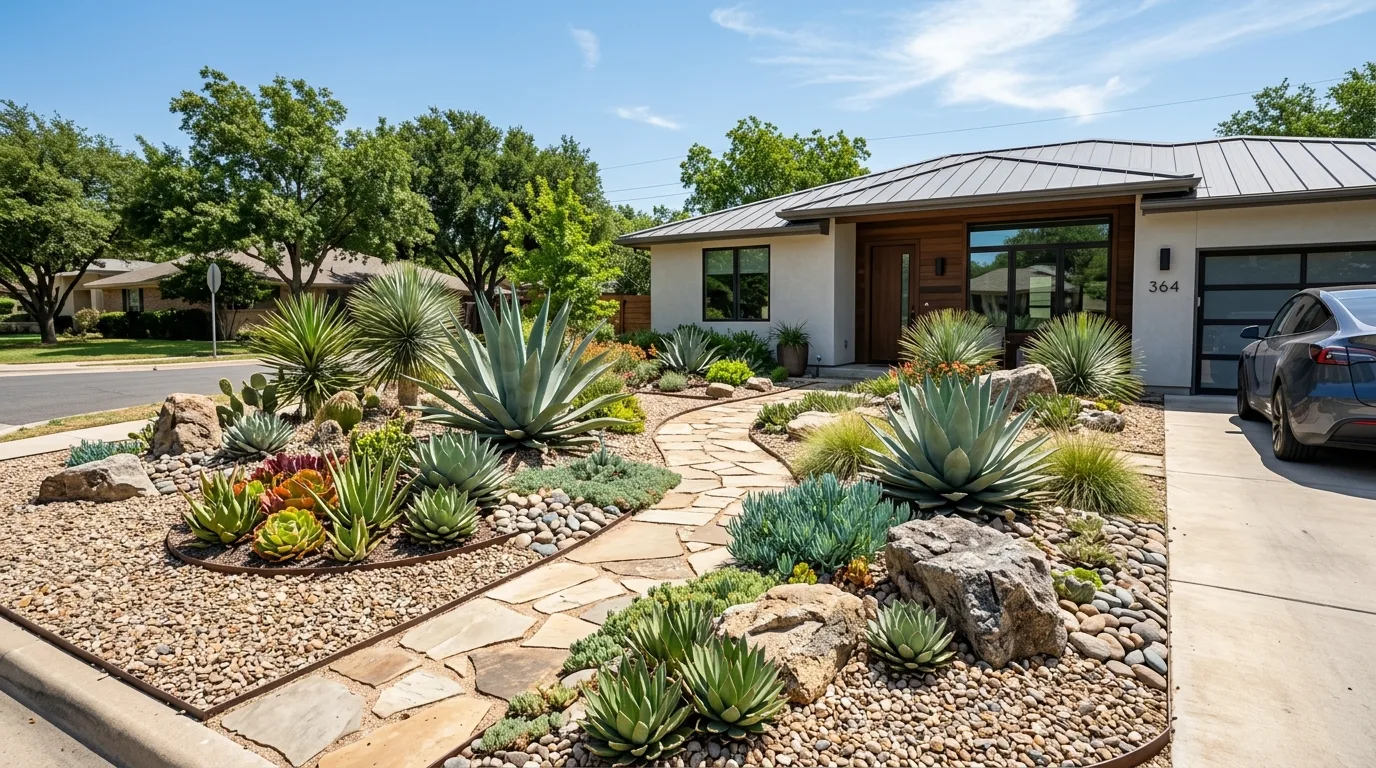
Gravel and Drought Plant Bed
A gravel bed with drought-tolerant plants is one of the clearest ways to reduce watering needs.
A xeriscape classic.
Best for: dry front yards
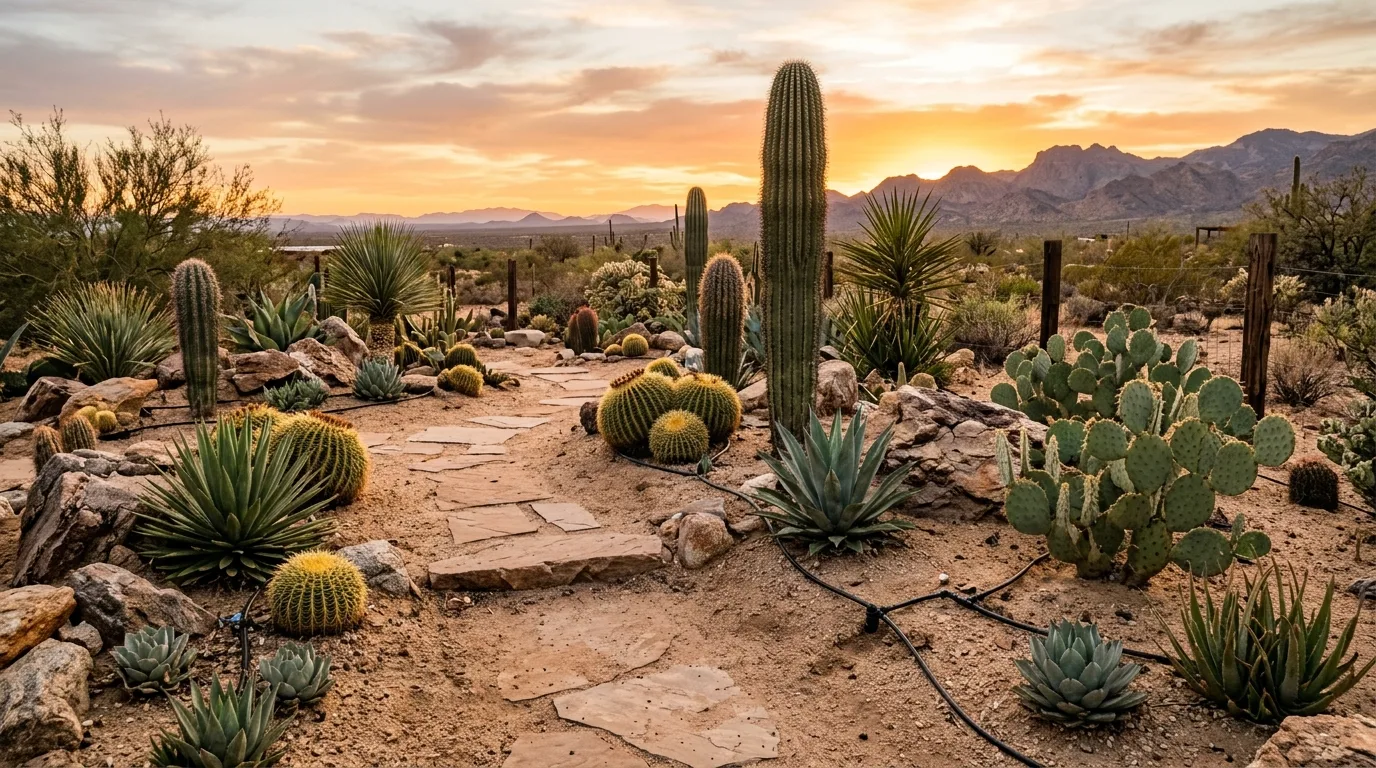
Rock-Based Xeriscape Border
Rocks create a strong framework for planting while keeping the landscape lower maintenance.
Useful around edges and foundations.
Best for: defined planting areas
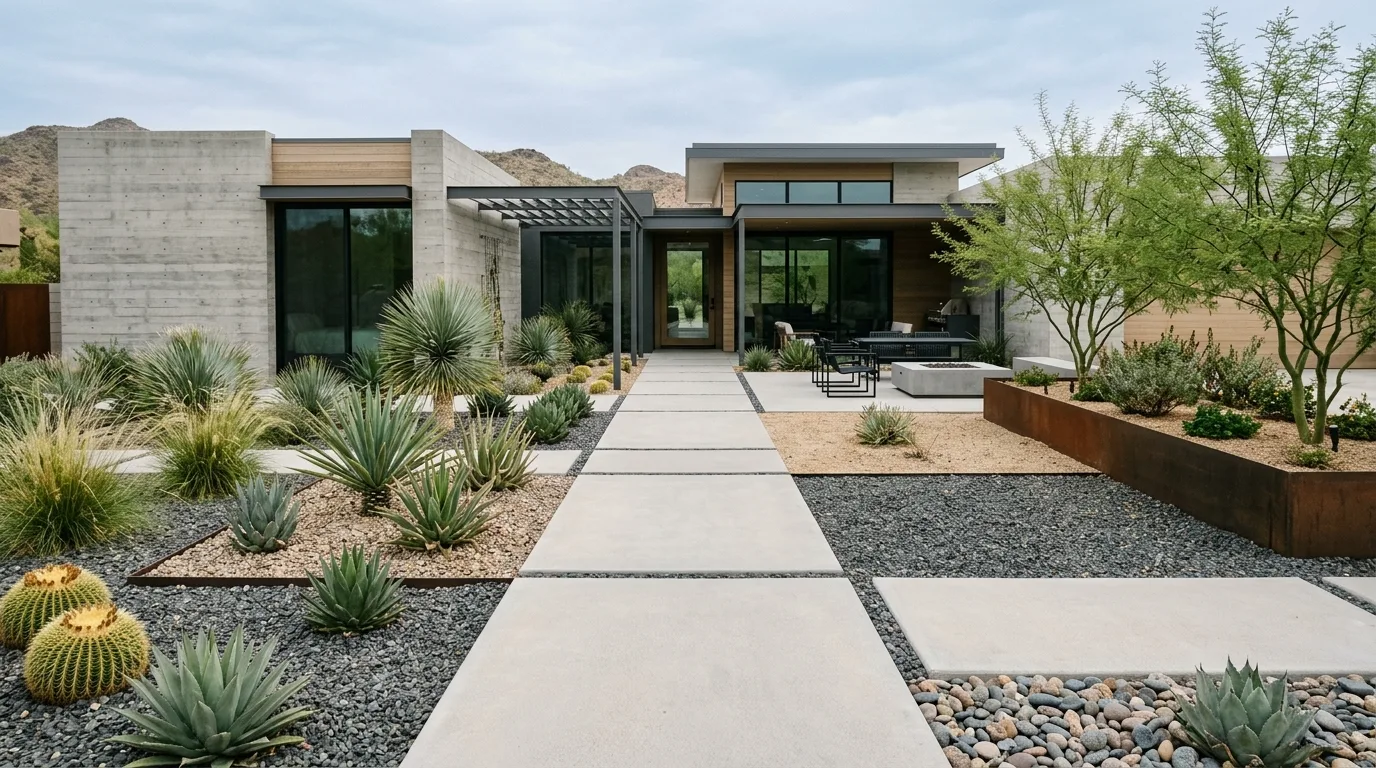
Succulent and Stone Layout
Succulents paired with stone create a clean, sculptural look that needs less water than traditional beds.
Best in sunnier spots.
Best for: modern drought-friendly yards
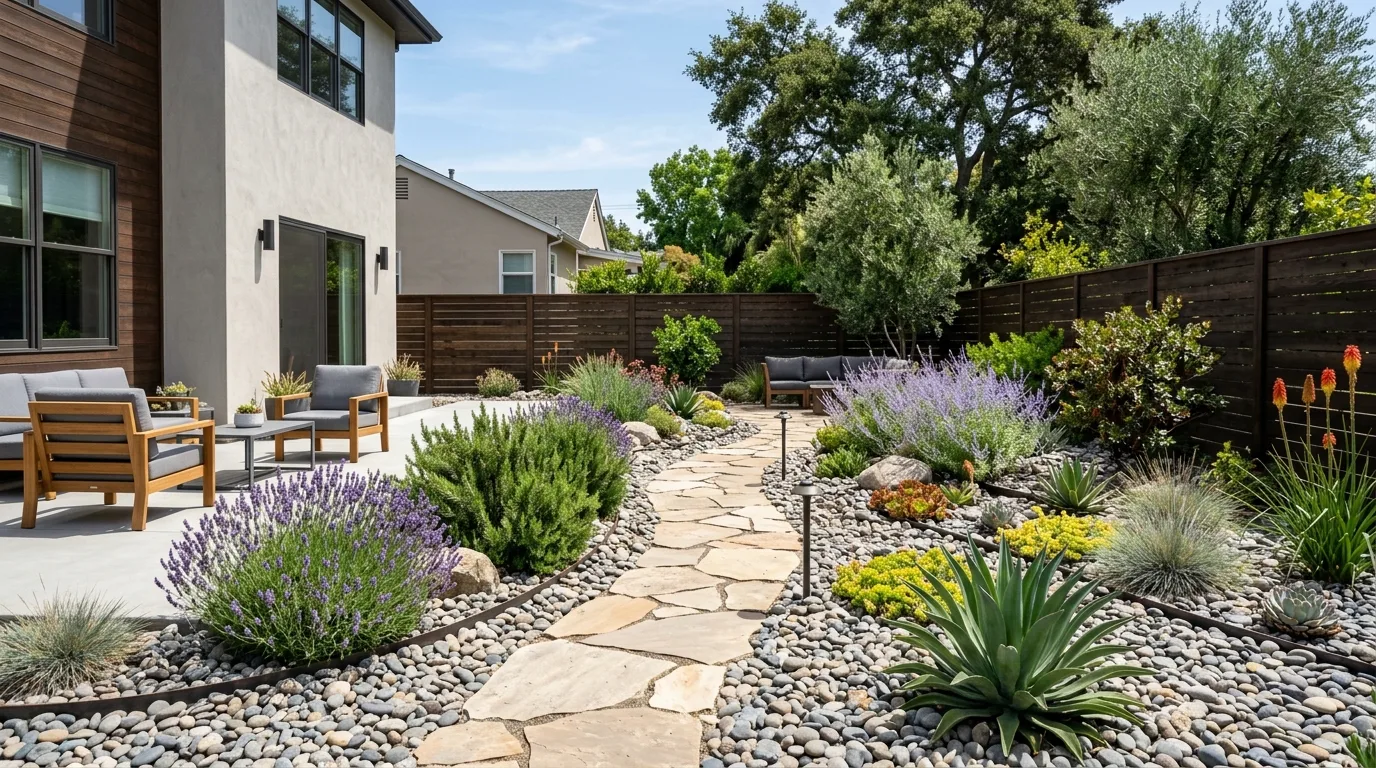
Mulched Xeriscape Front Bed
Mulch can still work in xeriscaping when it supports drought plants and clear bed shapes.
A softer alternative to full gravel.
Best for: mixed dry landscapes
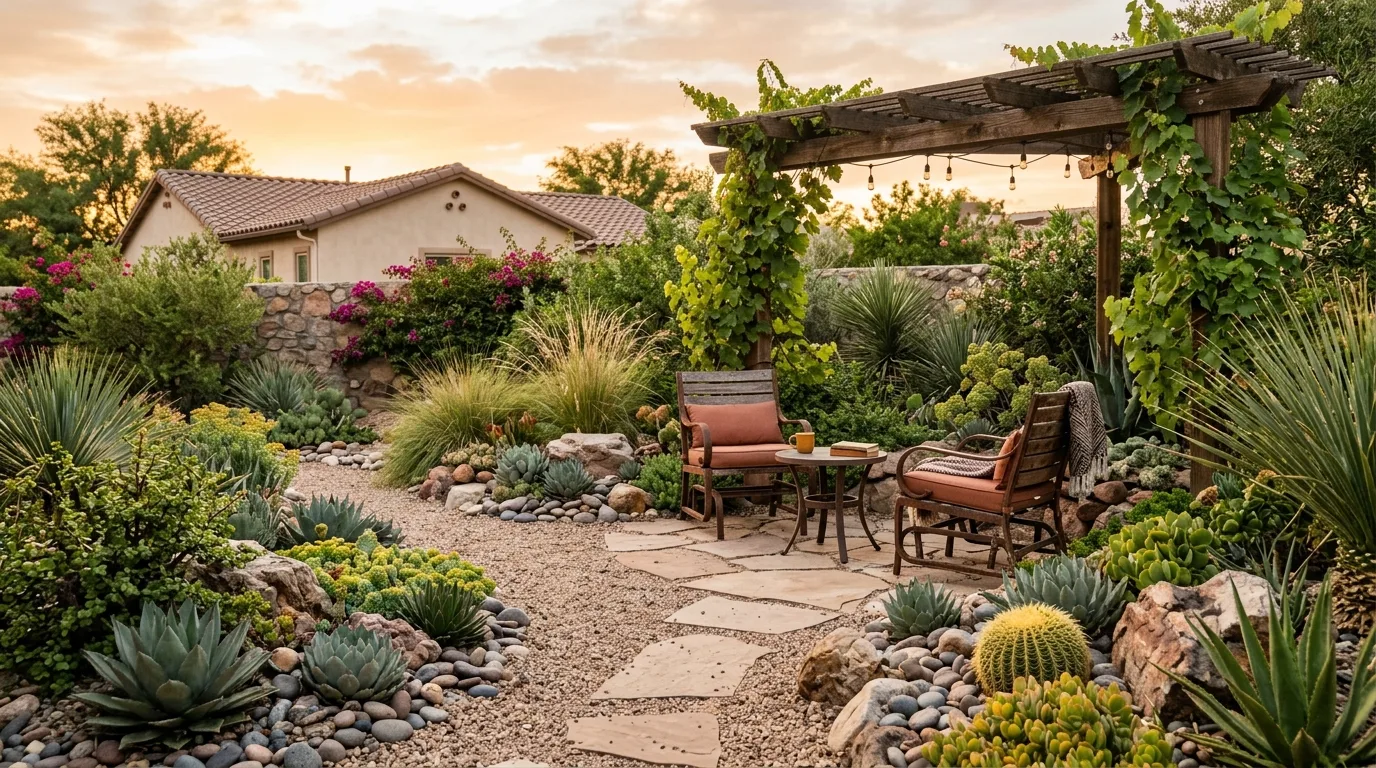
Dry Creek Xeriscape Feature
A dry creek bed adds drainage help and a more natural look to a water-saving landscape.
A practical design feature.
Best for: sloped or runoff areas
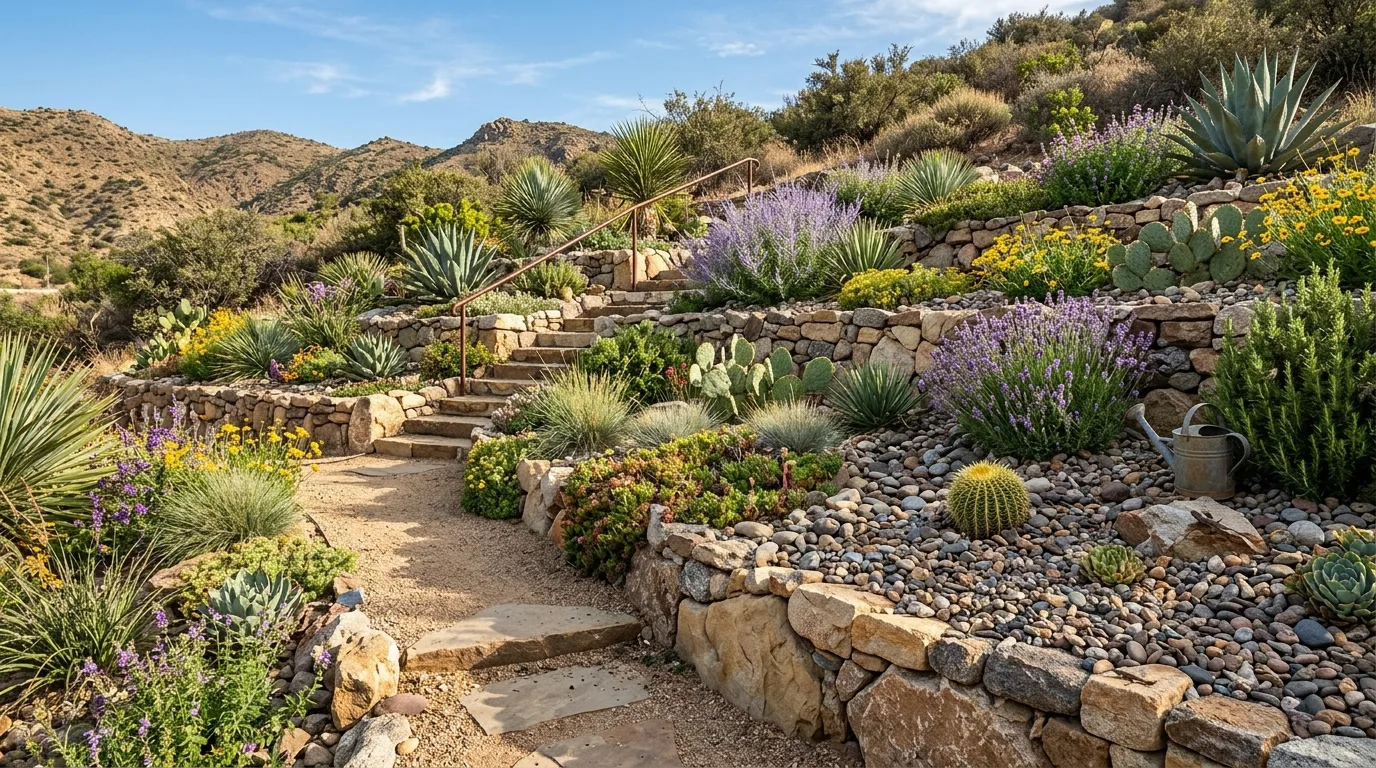
Minimal Planting Xeriscape
Using fewer plants with more breathing room makes the whole xeriscape feel cleaner and easier to maintain.
Less clutter works well here.
Best for: minimal yards
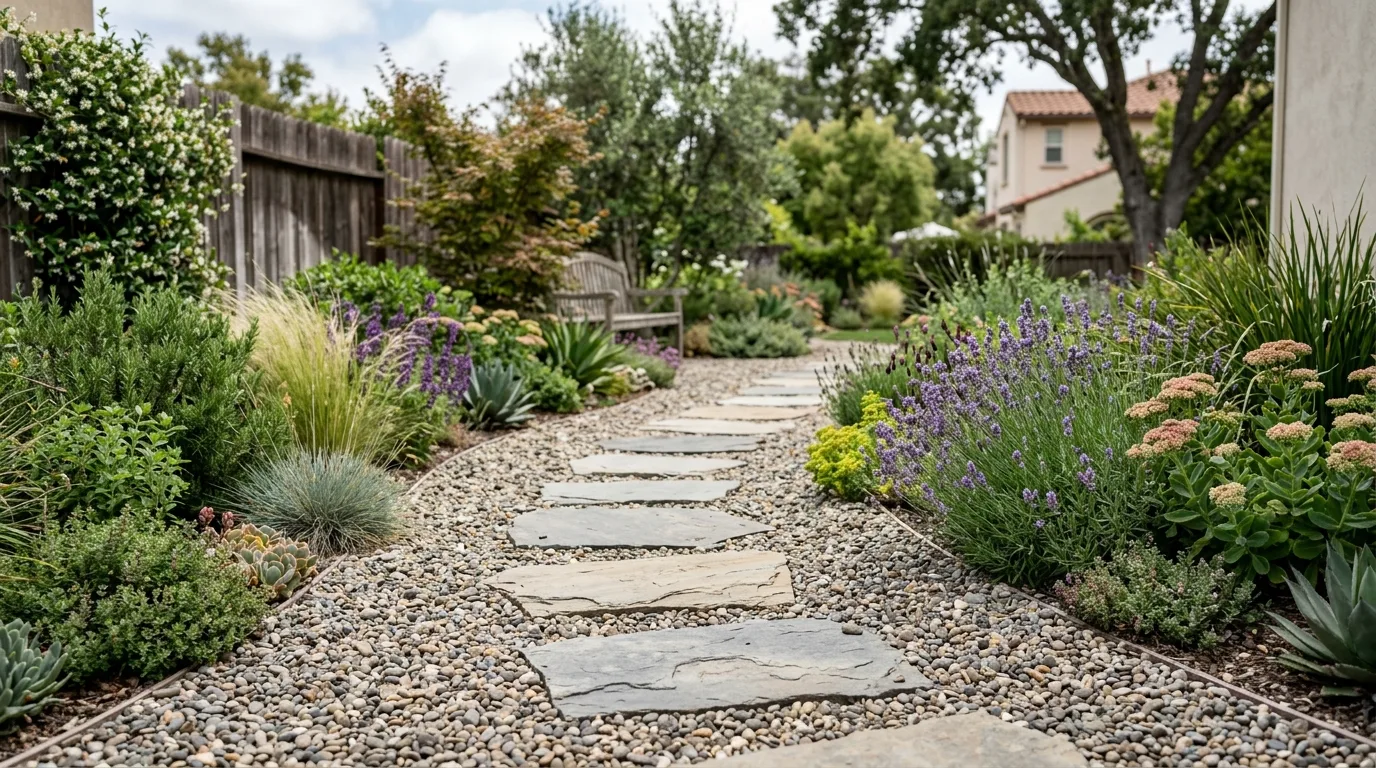
Pathway Through a Xeriscape Garden
A simple path makes a dry landscape feel more usable and ties the whole garden together better.
Important for circulation.
Best for: walkable layouts
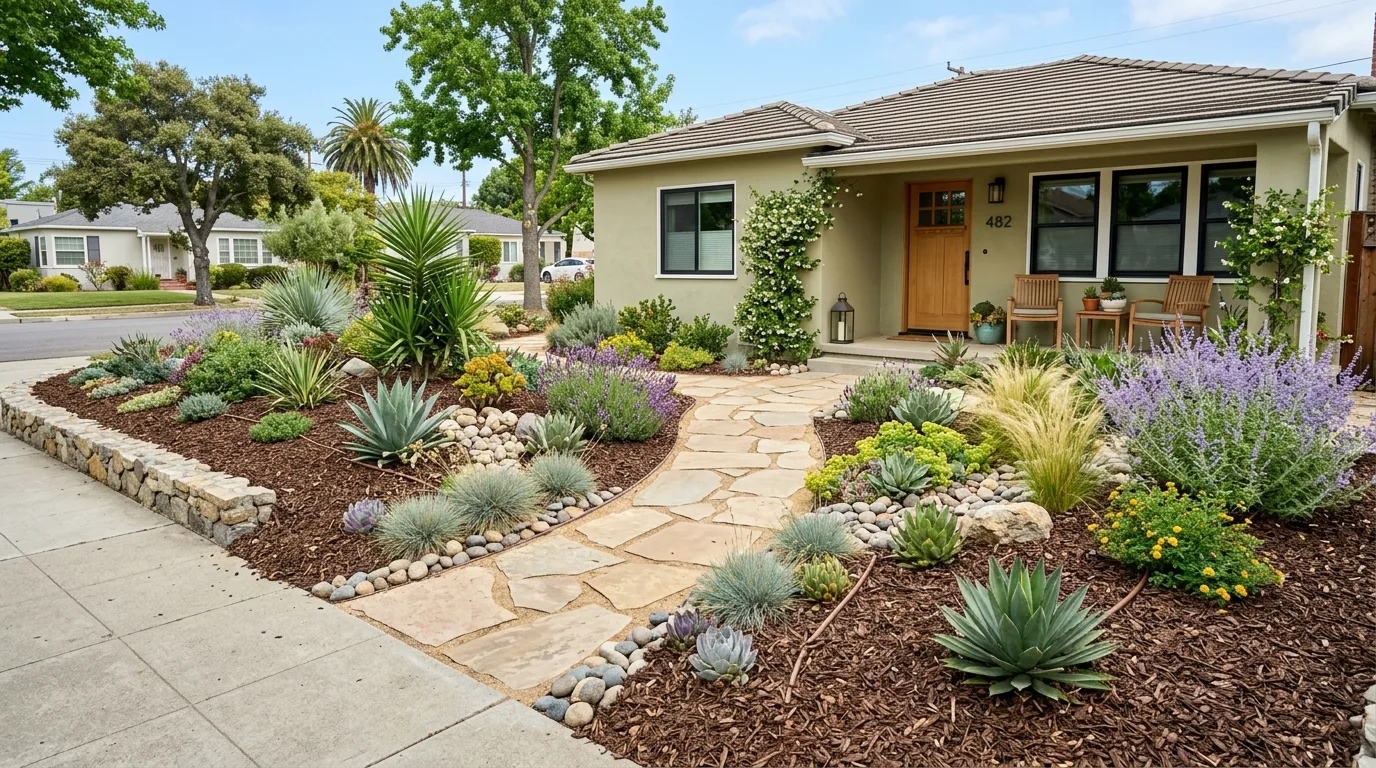
Xeriscape With Accent Pots
A few large containers can add visual interest without increasing water demands too much.
Use sparingly for best effect.
Best for: decorative dry gardens
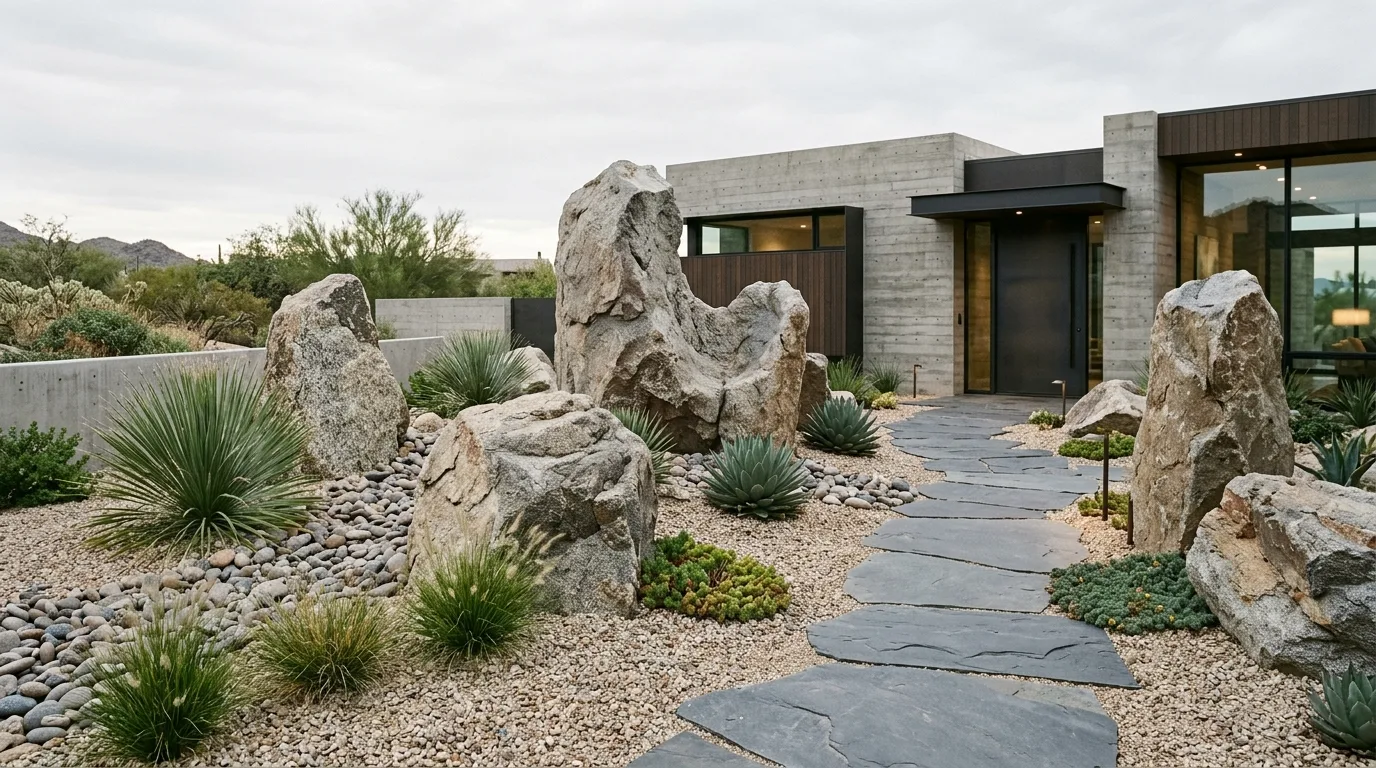
Foundation Xeriscape Planting
A front foundation bed can be xeriscaped in a way that still looks polished and welcoming.
Good for curb appeal with less watering.
Best for: house fronts
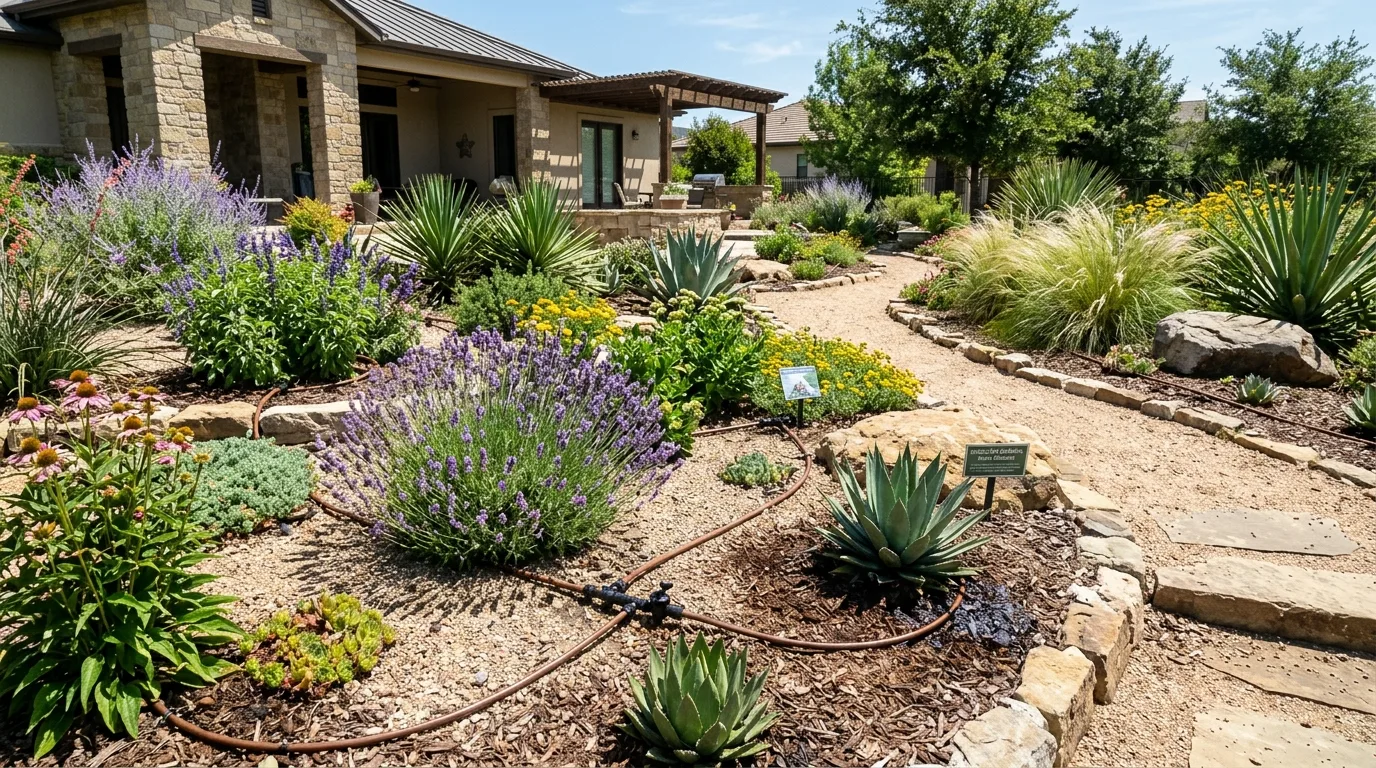
Layered Water-Saving Plant Mix
Layered dry-climate planting makes the yard feel fuller while still respecting water limits.
A strong middle ground.
Best for: balanced xeriscapes
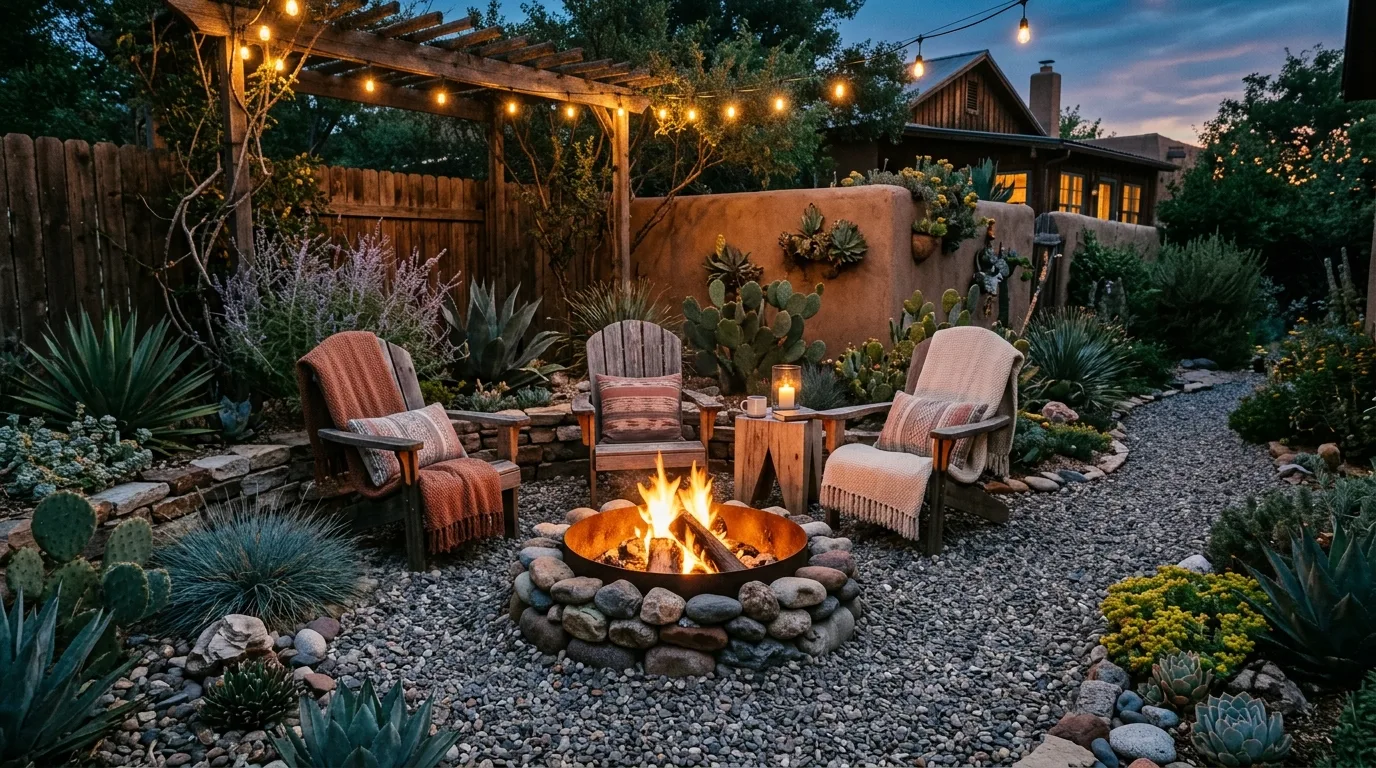
Complete Xeriscape Plan
The best xeriscape ideas combine layout, materials, and plant grouping so the space feels designed rather than stripped down.
The complete xeriscape example.
Best for: best overall water-saving landscape
How to make xeriscape landscaping look good
Xeriscape landscaping looks strongest when the layout feels deliberate and the materials are balanced with enough planting. Good structure and repetition usually keep a dry landscape from feeling empty.