
Shady areas can become some of the calmest and most beautiful parts of a yard when the layout supports texture and flow. These shade garden ideas focus on cooler spaces that need structure more than bright flower color.
Why these ideas work
- Shade gardens benefit from varied leaf shape and plant height.
- Paths and clear bed shapes help lower-light spaces feel intentional.
- A small seating spot can make a cool shaded area more usable.
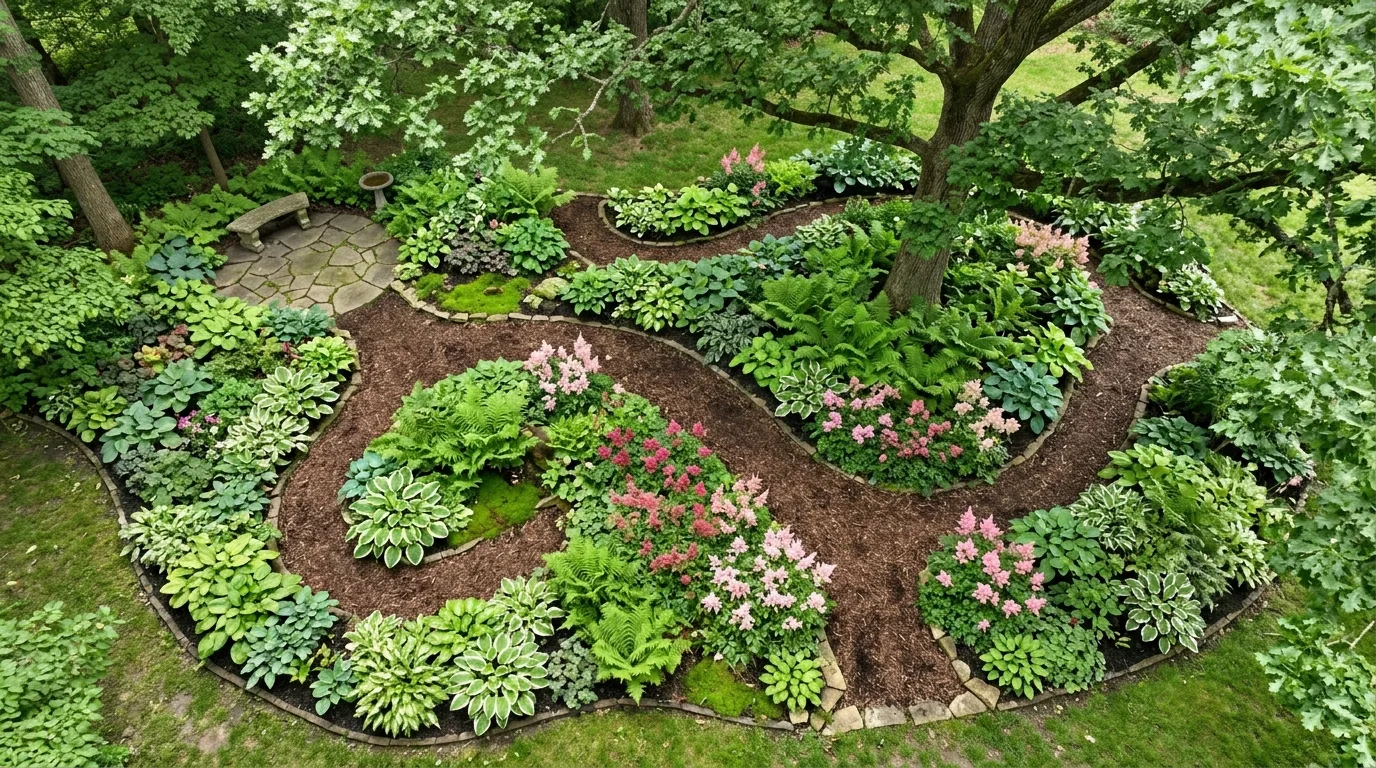
Layered Shade Border
A layered border uses foliage and height changes to make the shade garden feel full and soft.
Very effective in deep shade.
Best for: wooded edges
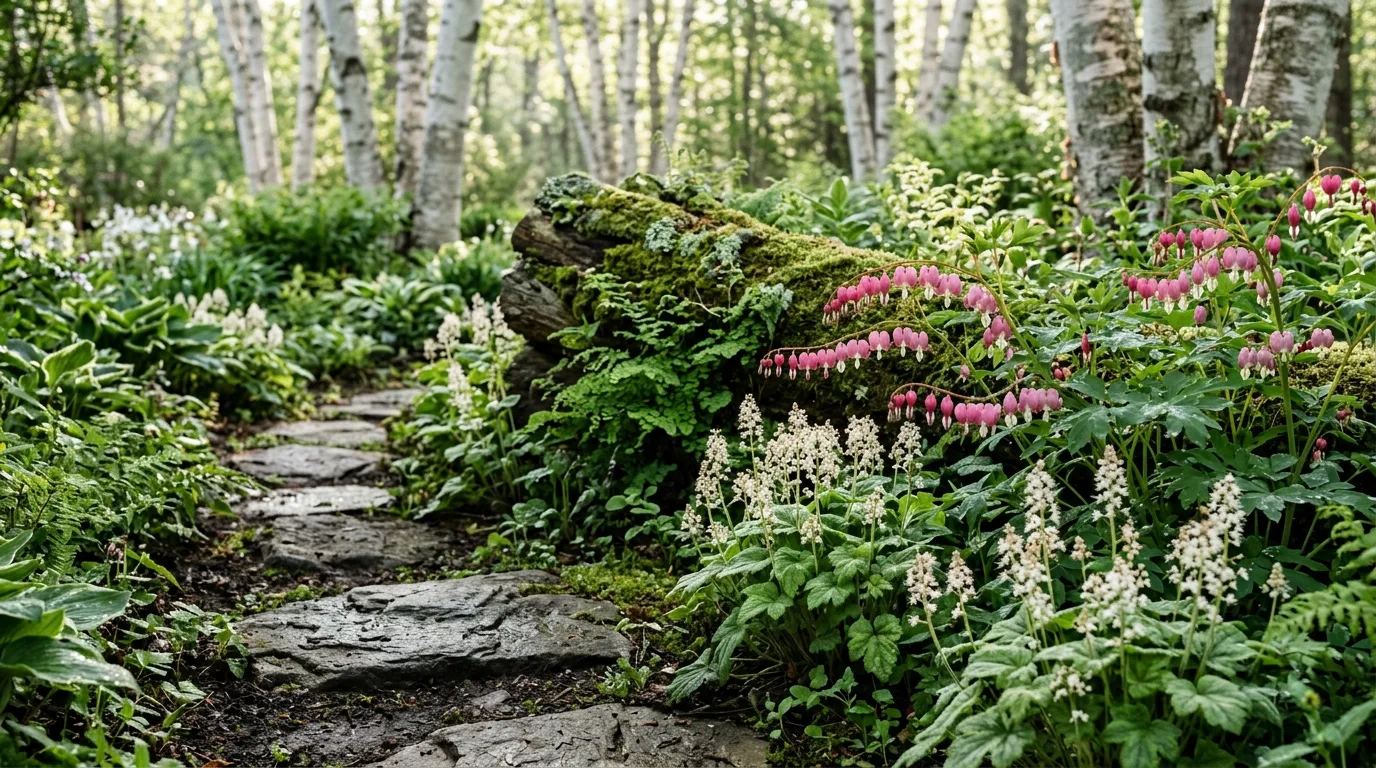
Shade Garden With Curved Path
A curved path helps cool shaded areas feel more inviting and easier to move through.
Good for larger shade beds.
Best for: walk-through spaces
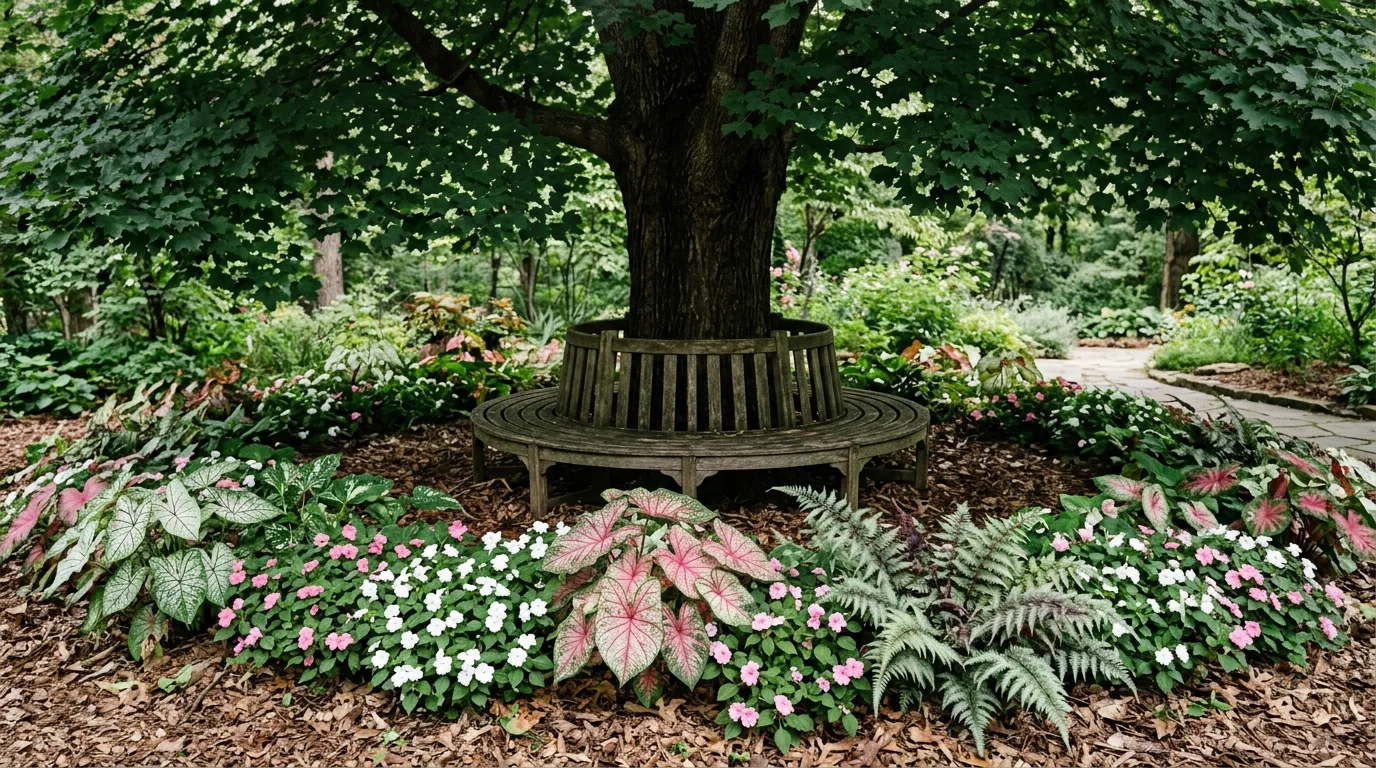
Hosta and Fern Layout
A simple hosta-and-fern layout creates reliable texture and a classic shade-garden look.
A dependable combination.
Best for: classic shade planting
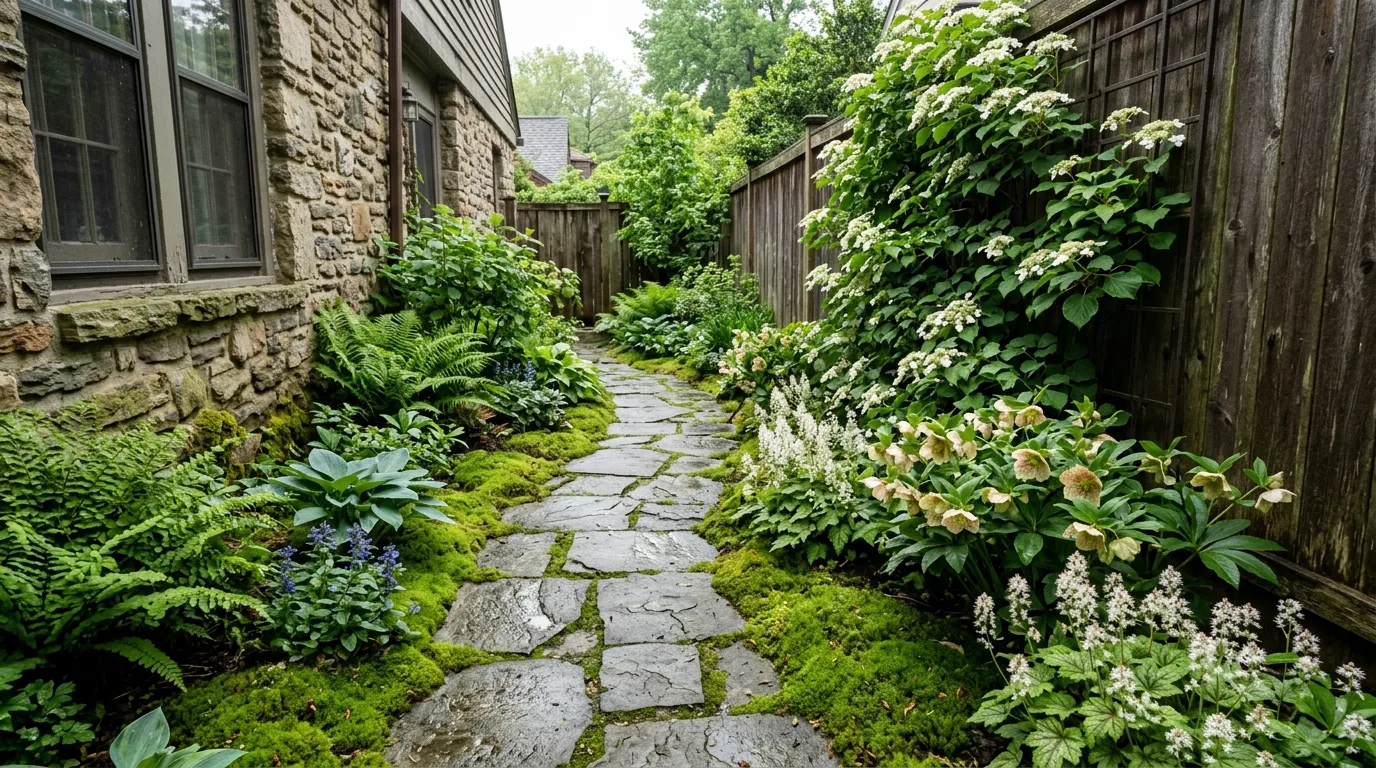
Shade Garden Seating Corner
A cool shaded corner becomes more useful when it includes a bench or small sitting area.
Best with a protected feel.
Best for: quiet retreats
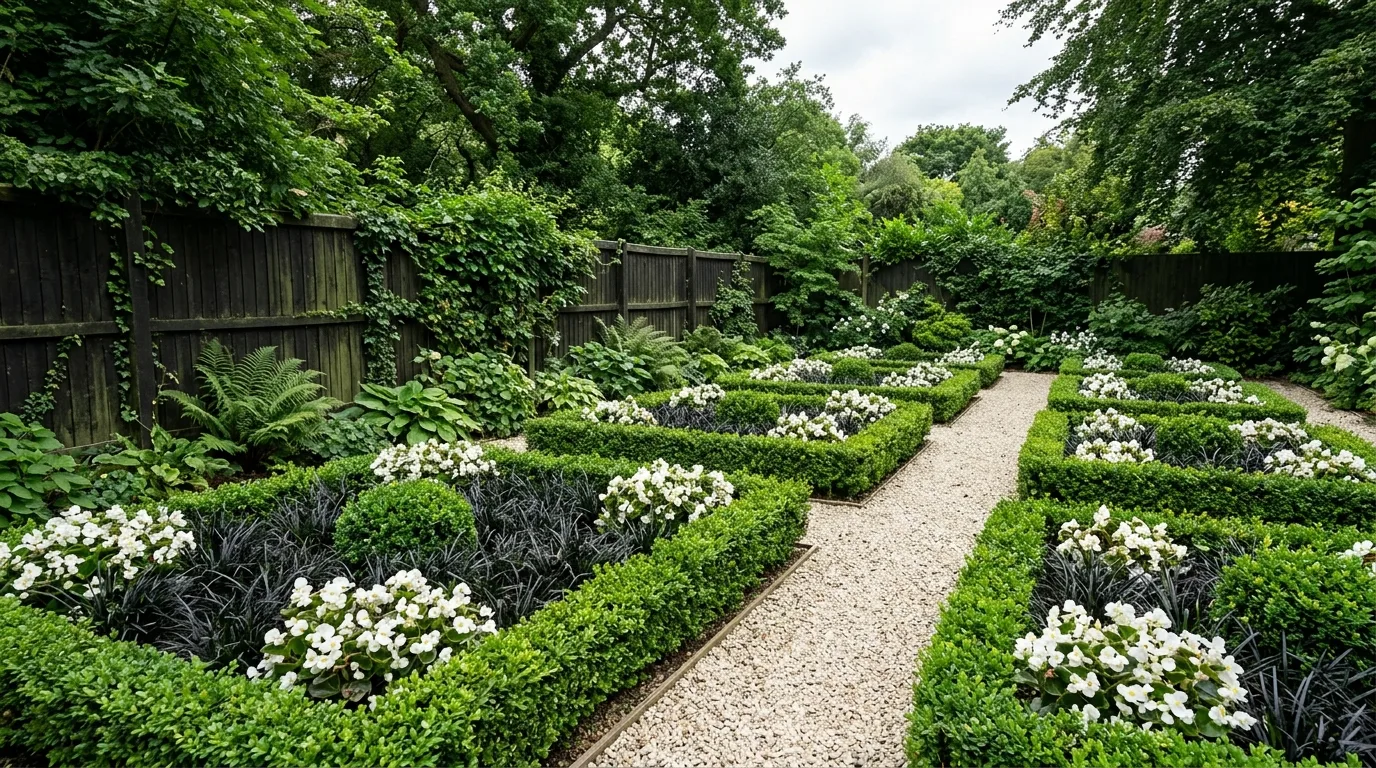
Stone and Shade Plant Mix
Stone elements help give a shade garden more structure where flowers may be less dominant.
A good balance of texture.
Best for: low-color shady beds
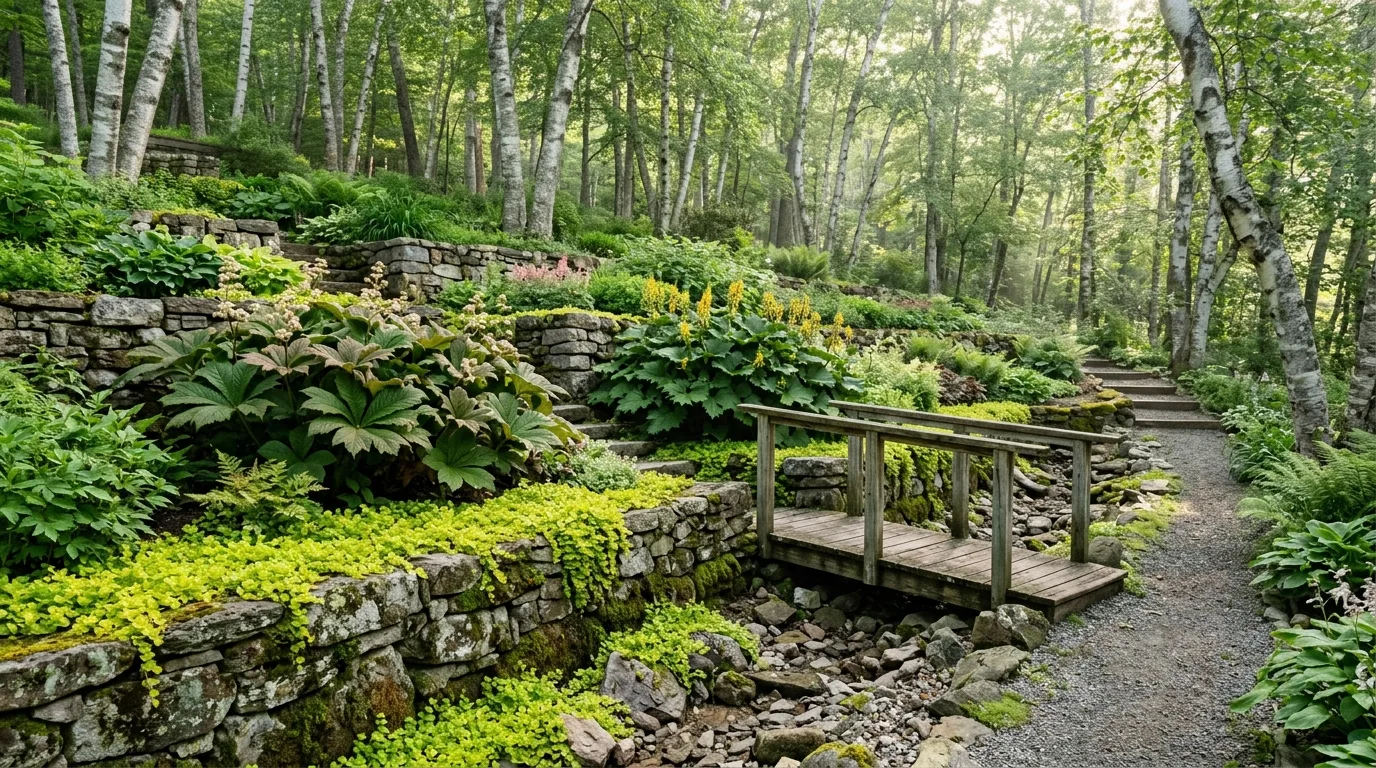
Small Shade Garden Near the House
A compact shade bed near the home can still feel lush when the layout stays simple and layered.
Useful for side yards too.
Best for: tight shade zones
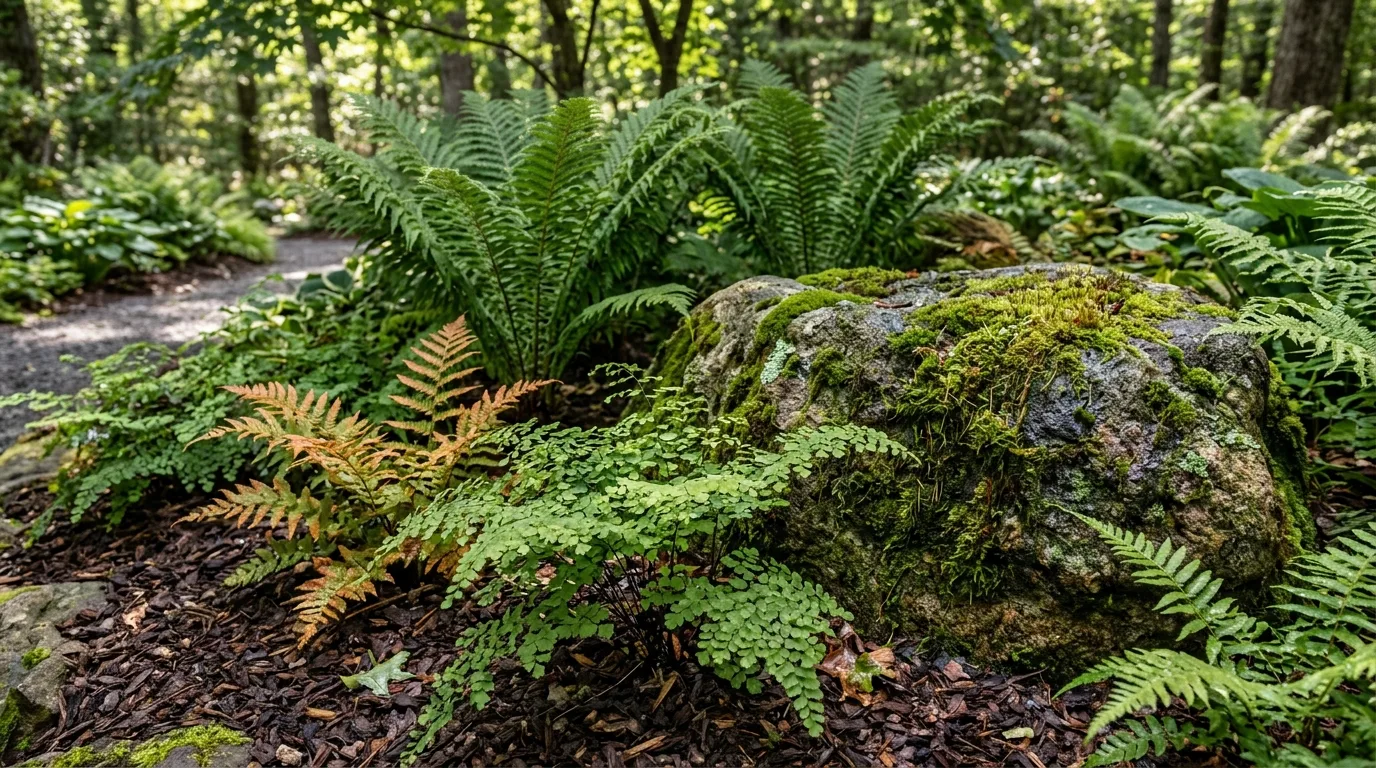
Woodland-Inspired Shade Layout
A woodland style uses softer plant groupings to make the garden feel more natural and calm.
Best with organic shapes.
Best for: natural shade gardens
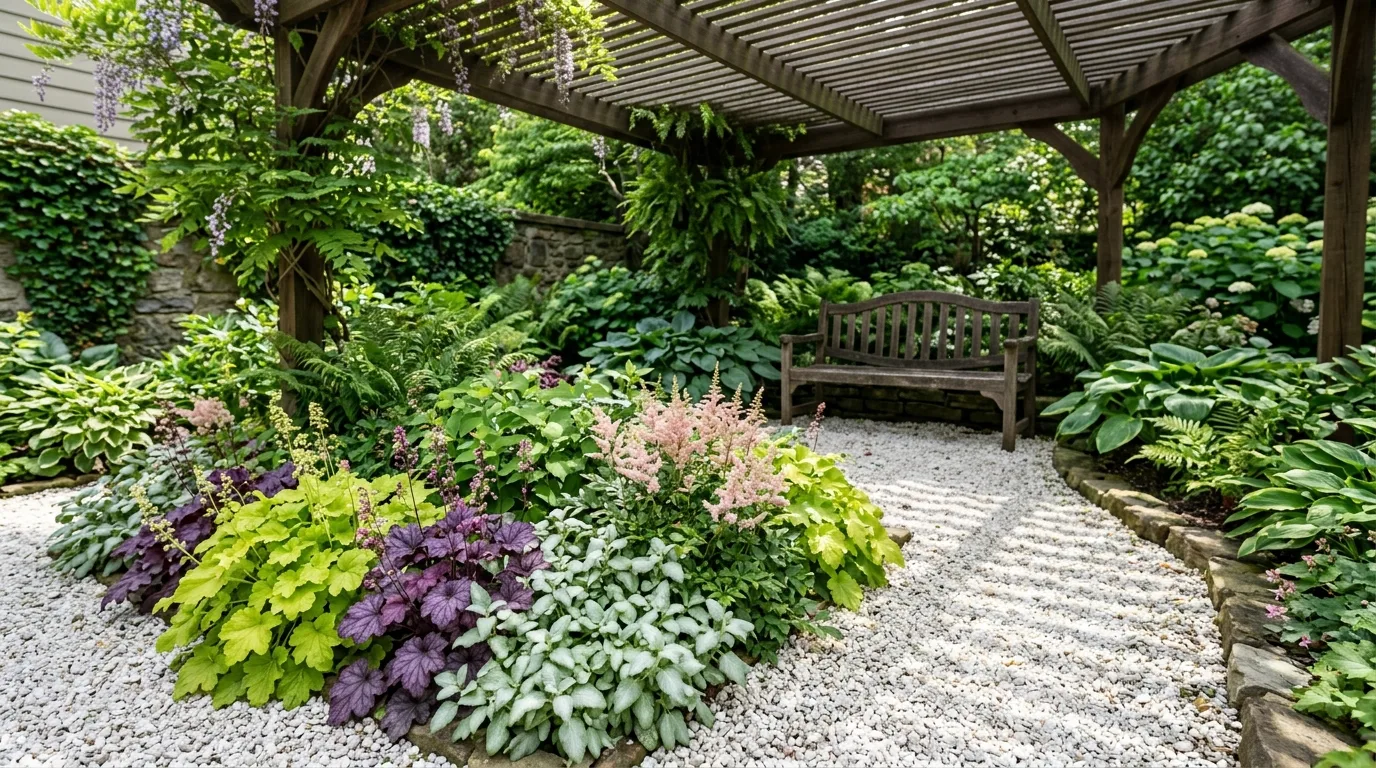
Complete Cool Shade Garden Plan
The best shade garden layouts combine texture, structure, and circulation so the space feels restful instead of overlooked.
The complete shade-garden example.
Best for: best overall cool-space design
What makes a shade garden layout work
Shade gardens feel strongest when the layout highlights texture, movement, and calm planting combinations. A clear path or focal point usually helps a cool shaded area feel more intentionally designed.