
A natural fence can create privacy and boundary without making the yard feel too manufactured. These ideas lean on living plants, natural wood, stone, and woven materials for a softer eco-friendly look.
Why these ideas work
- Living hedges, branch fences, bamboo, stone, willow, driftwood, and mixed plant screens can all act as natural boundaries.
- Natural fences often improve with time as they settle into the landscape.
- Texture matters more than precision in most eco-friendly fence designs.
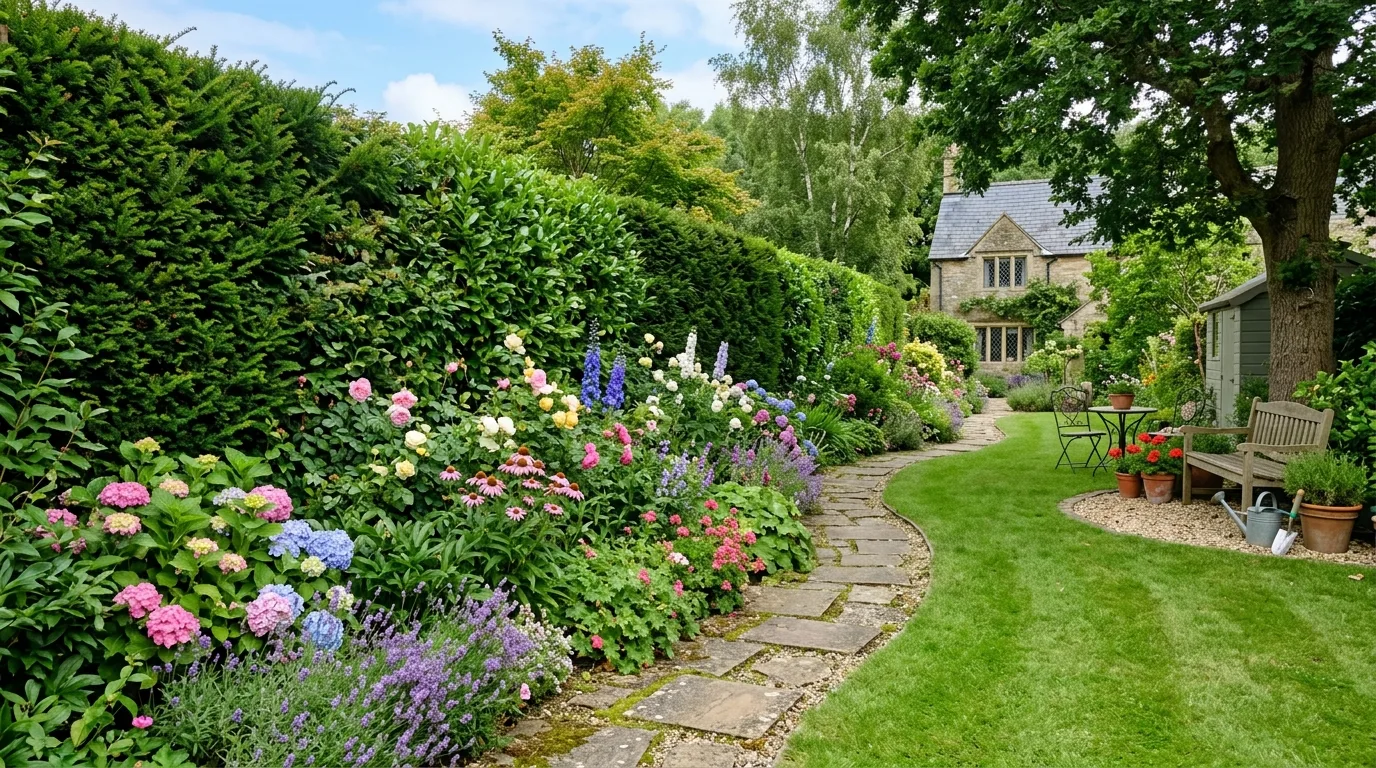
Living Hedge Fence Made of Dense Shrubs
A hedge fence is one of the best natural boundaries because it provides real screening while feeling alive and soft.
A classic eco-friendly solution.
Best for: living privacy screens
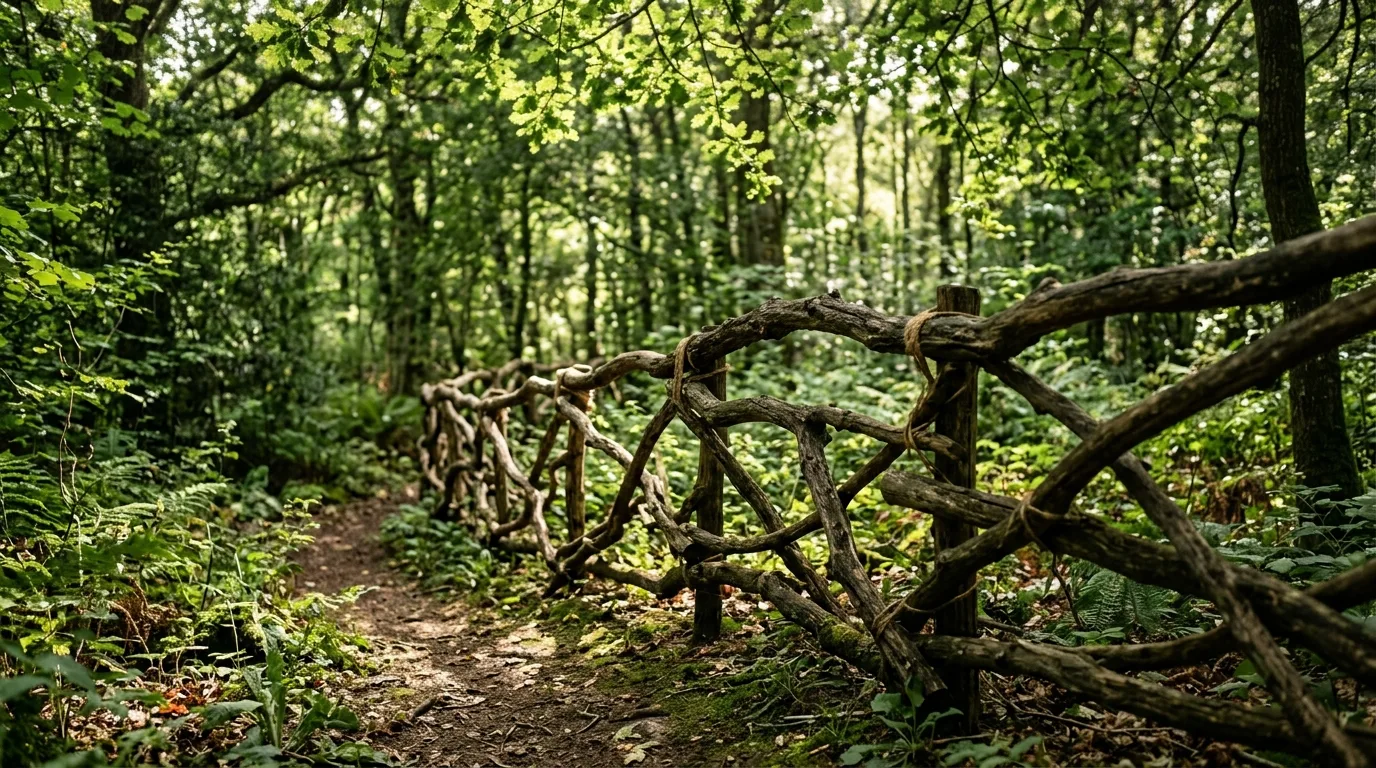
Rustic Fence Made of Intertwined Branches
Intertwined branches create a handmade rustic edge that feels deeply tied to the landscape.
A very natural craft-style fence.
Best for: rustic cottage gardens
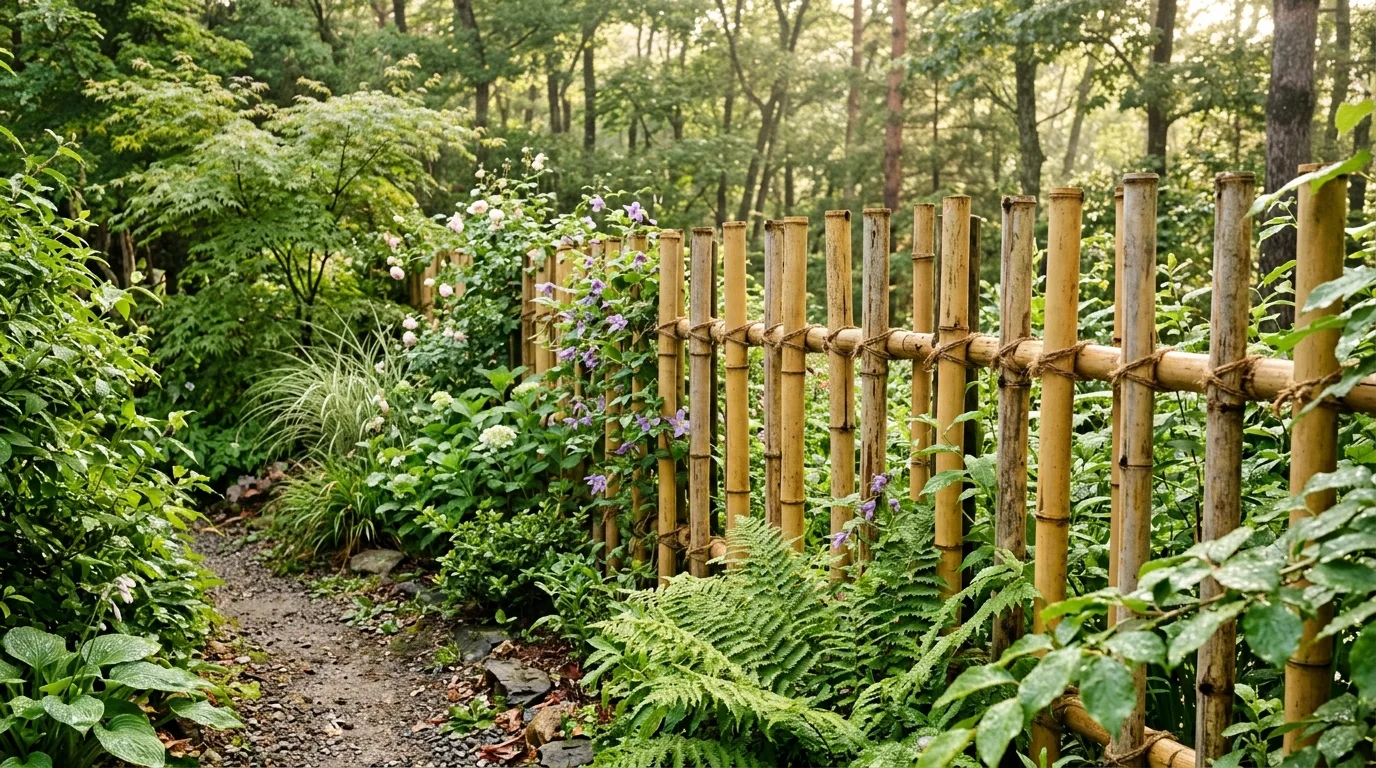
Natural Bamboo Fence With Surrounding Greenery
Bamboo is one of the easiest ways to bring a more organic and renewable feel into a fence line.
A warm, textured option.
Best for: green relaxed backyards
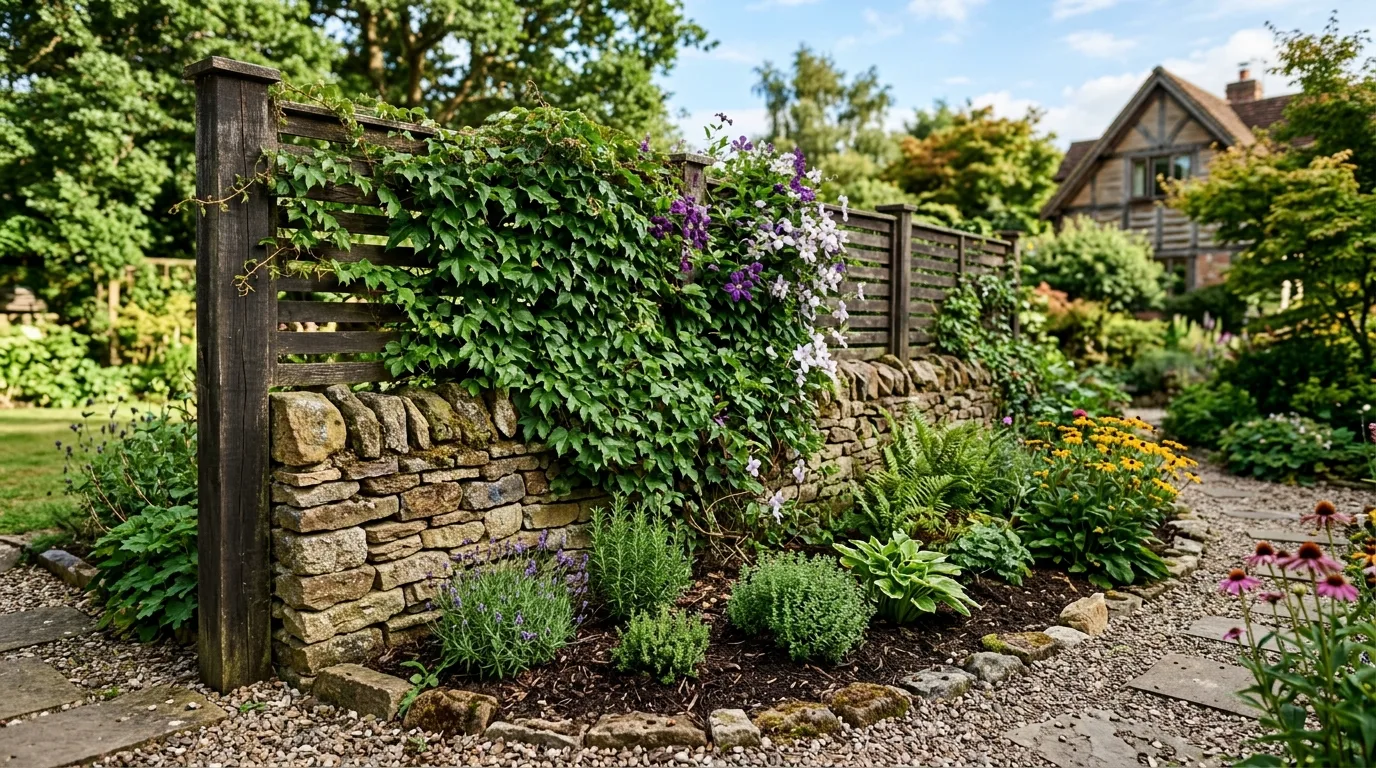
Stacked Stone Fence With Climbing Vines
Stone and vines create a boundary that feels permanent but still deeply connected to the garden around it.
A beautiful natural-material pairing.
Best for: grounded outdoor edges
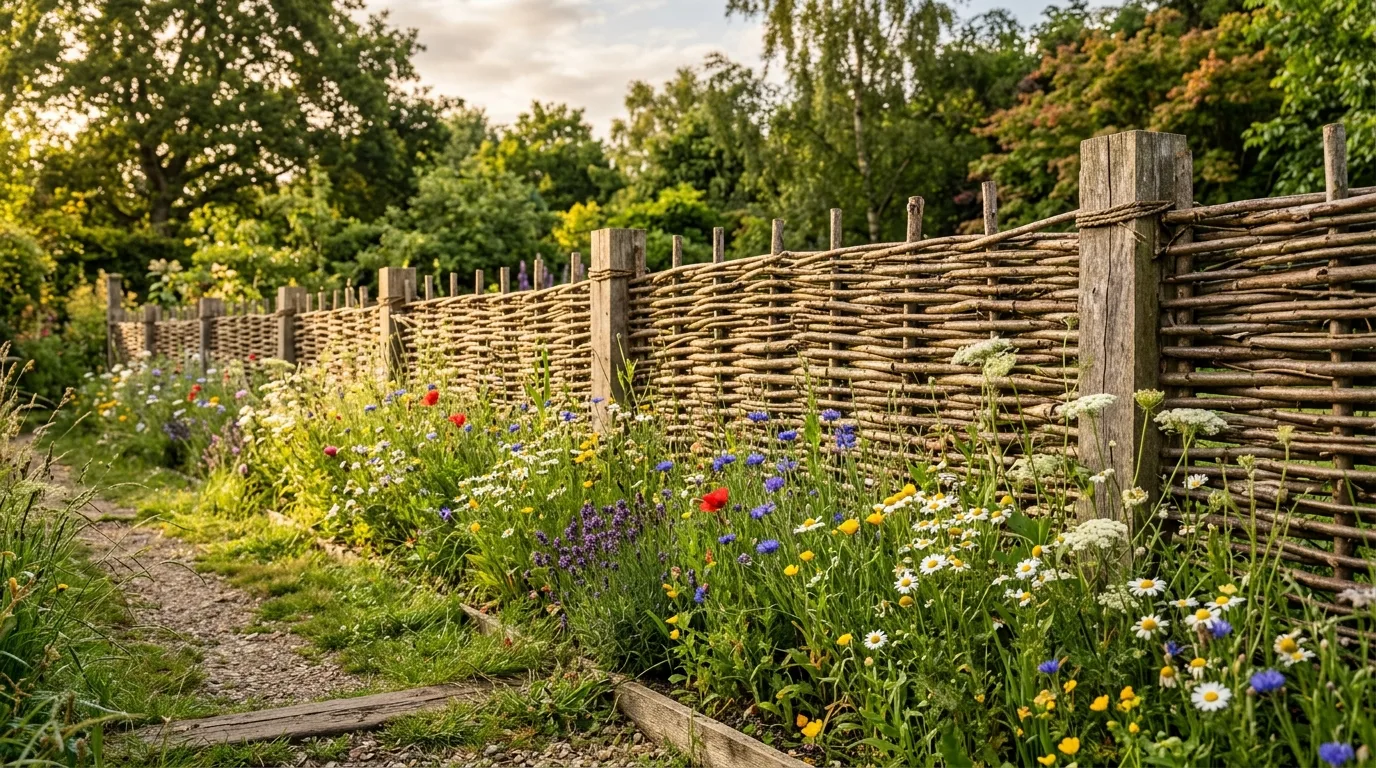
Backyard Fence Made of Willow Wattle
Willow wattle has a handmade texture that gives the boundary a very traditional and eco-friendly look.
A great fit for soft rustic spaces.
Best for: woven natural fences
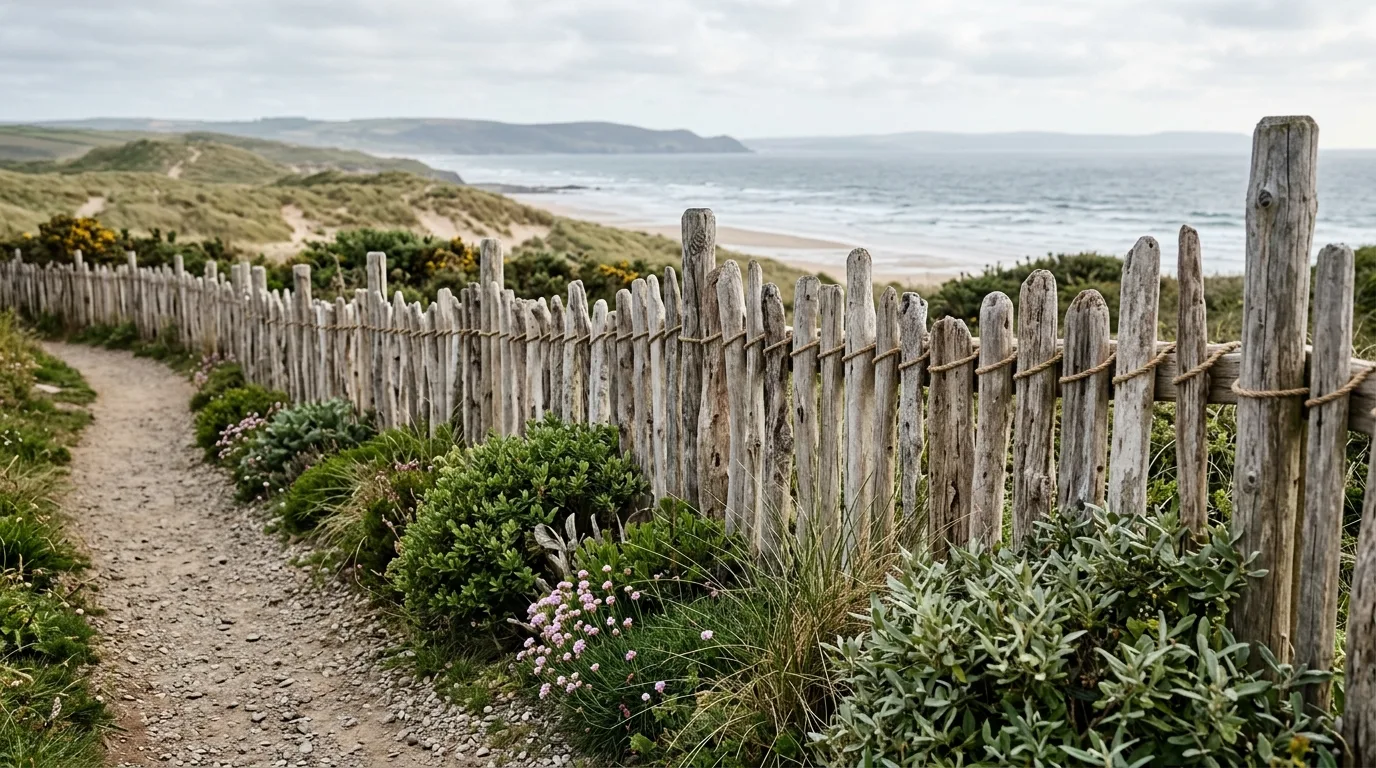
Minimalist Natural Fence With Driftwood Panels
Driftwood panels can keep the fence feeling natural while still fitting into a more design-focused yard.
An unusual but attractive approach.
Best for: natural minimalist gardens
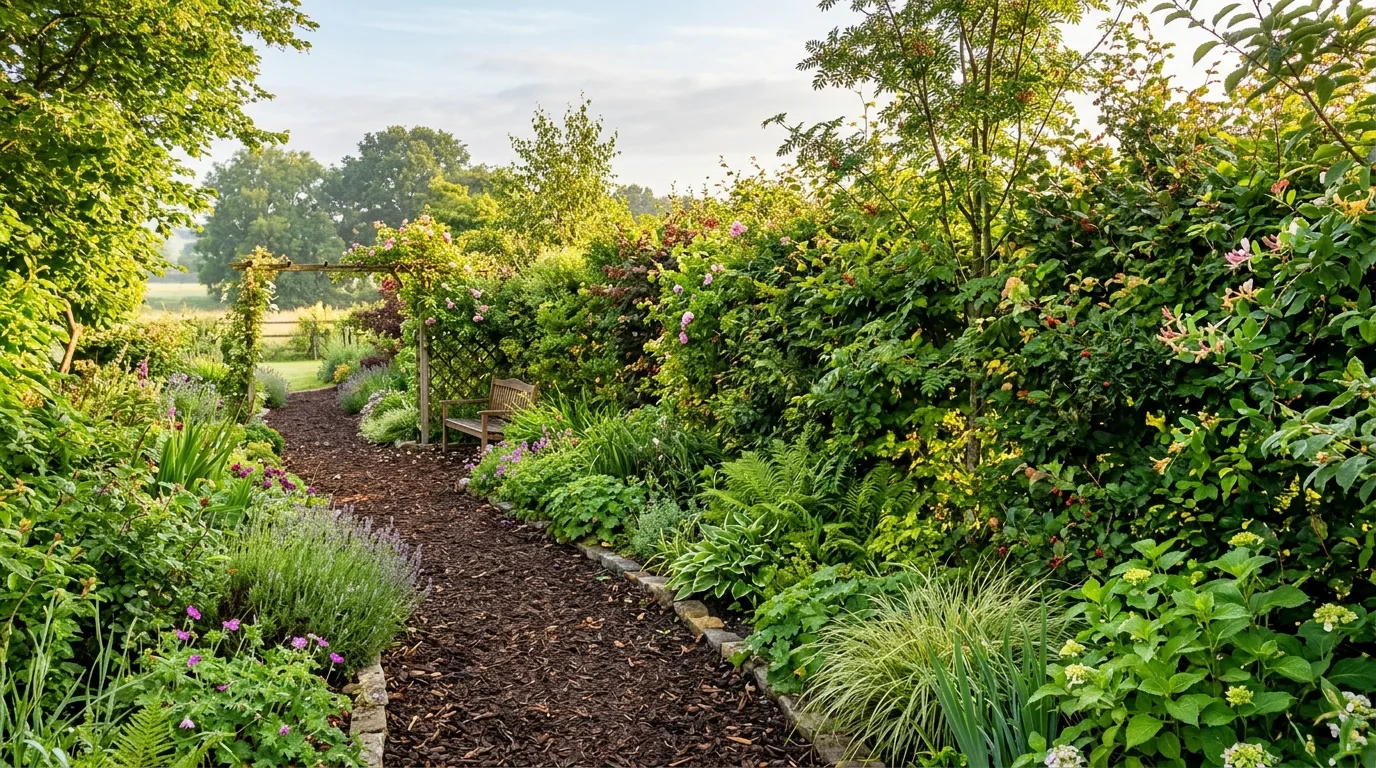
Living Fence With Mixed Hedges and Small Trees
A mix of hedges and small trees gives the boundary more texture and makes it feel like part of the ecosystem of the yard.
A strong long-term landscape solution.
Best for: layered living boundaries
Why natural fences feel more eco-friendly
Natural fences feel more eco-friendly because they rely on living materials, reclaimed textures, or simpler organic forms. The best ones create a boundary that feels like part of the landscape instead of something forced onto it.