
Hydrangeas can give a yard fuller structure and richer seasonal color when they are placed with intention. These ideas focus on borders, foundation beds, focal planting, and layouts that let hydrangeas shine without overwhelming the yard.
Why these ideas work
- Hydrangeas are especially effective in borders, entry plantings, and mixed flower beds.
- They usually look strongest when repeated, not scattered randomly.
- Full blooms need enough space and support from surrounding greenery.
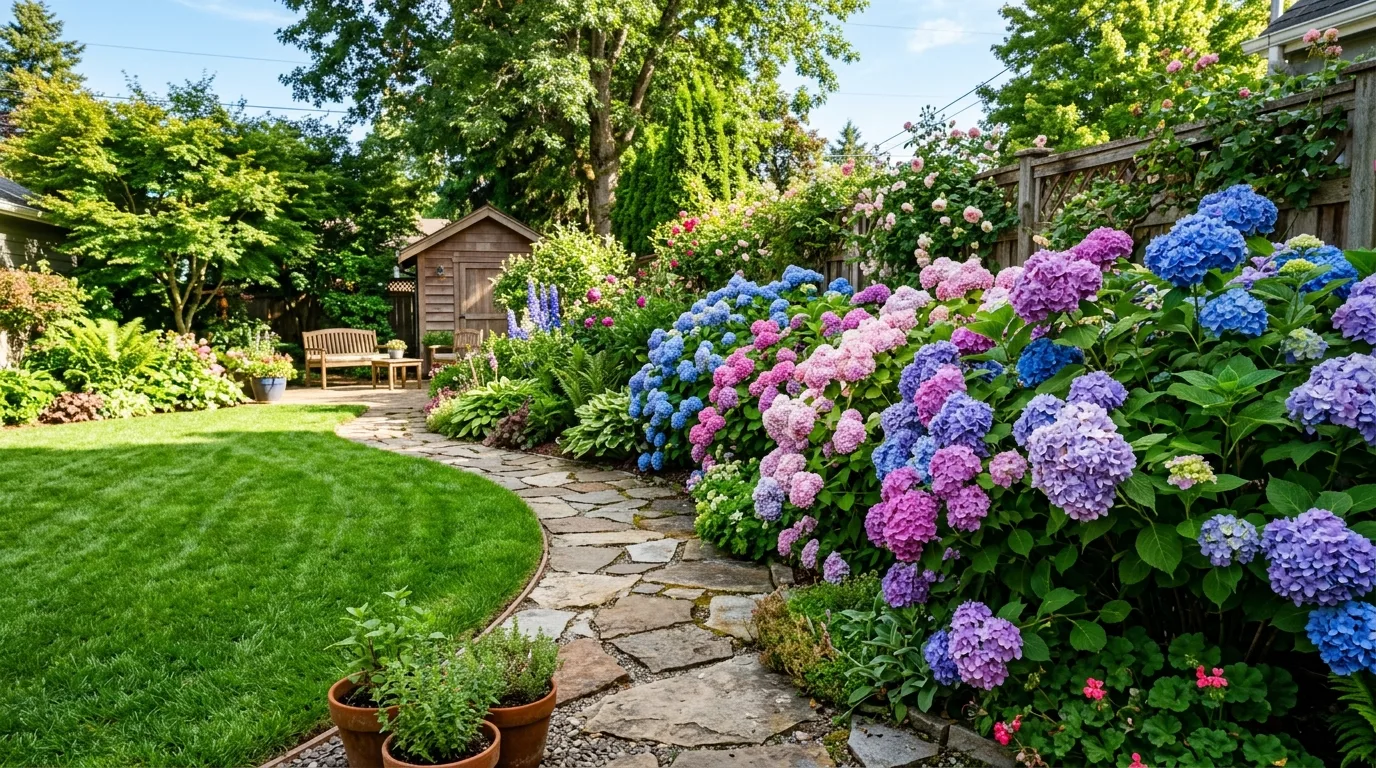
Hydrangea Foundation Bed
A hydrangea bed near the home can soften the facade and add fuller seasonal interest.
A classic placement.
Best for: front-yard softness
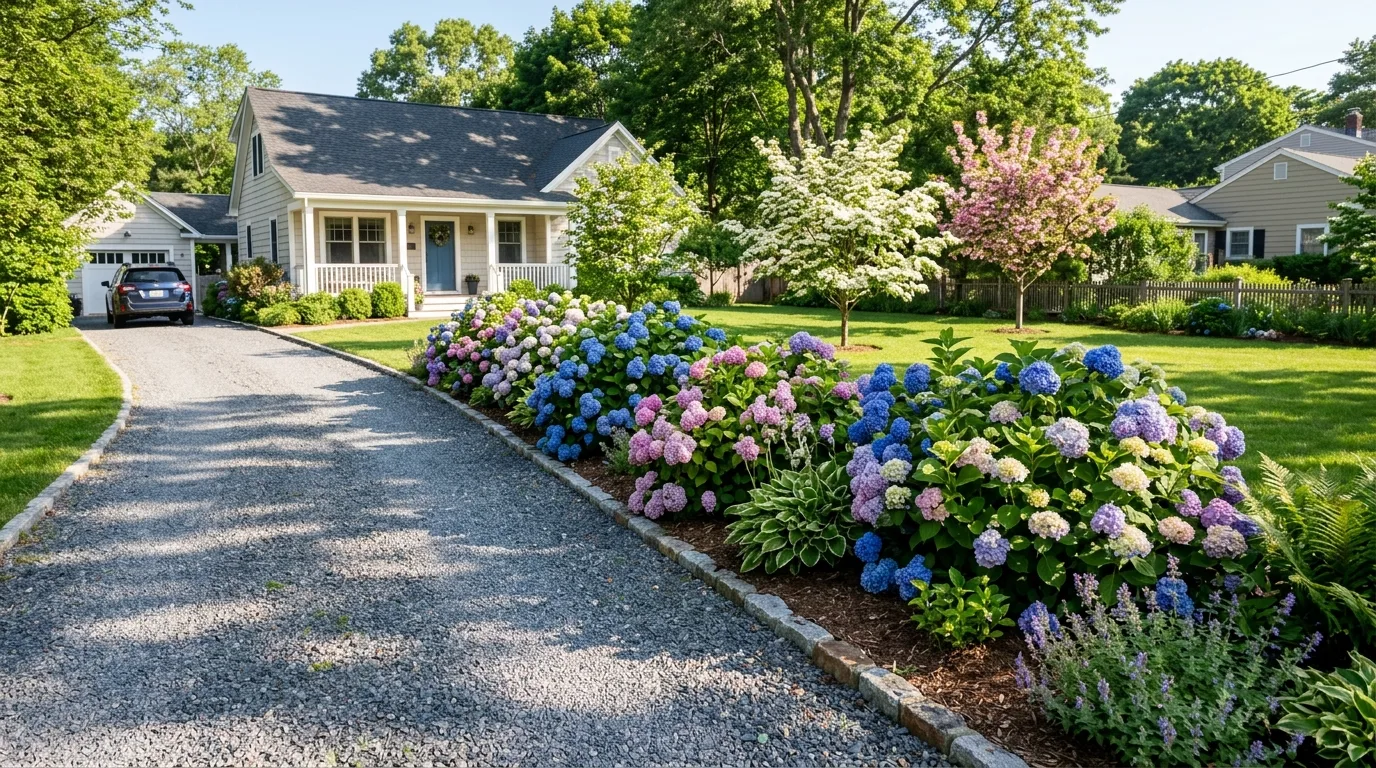
Mixed Border With Repeated Hydrangeas
Repeating hydrangeas through a border helps the yard feel more unified and lush.
Good for rhythm.
Best for: longer beds
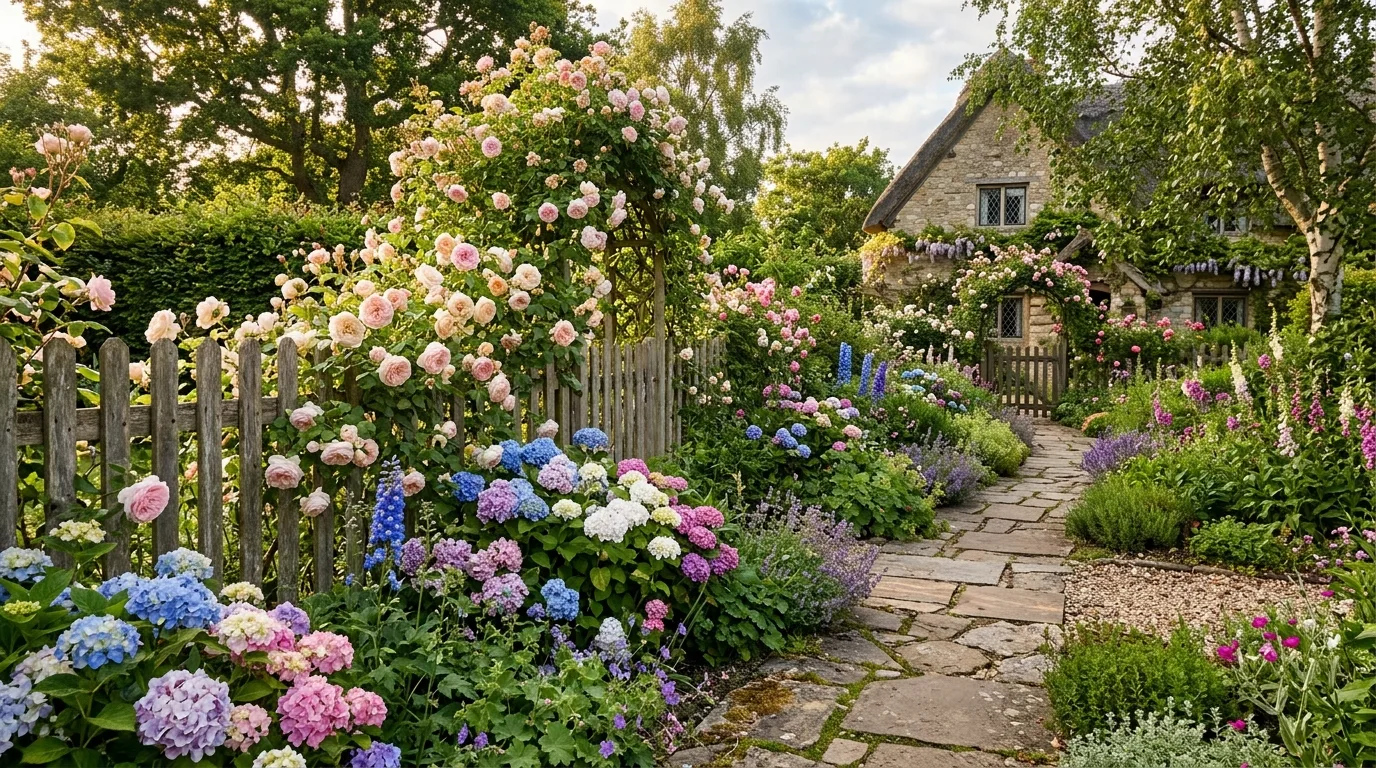
Hydrangeas Framing a Garden Path
Pathside hydrangeas create a fuller and more welcoming garden approach when they are given enough space.
Very inviting visually.
Best for: walkways
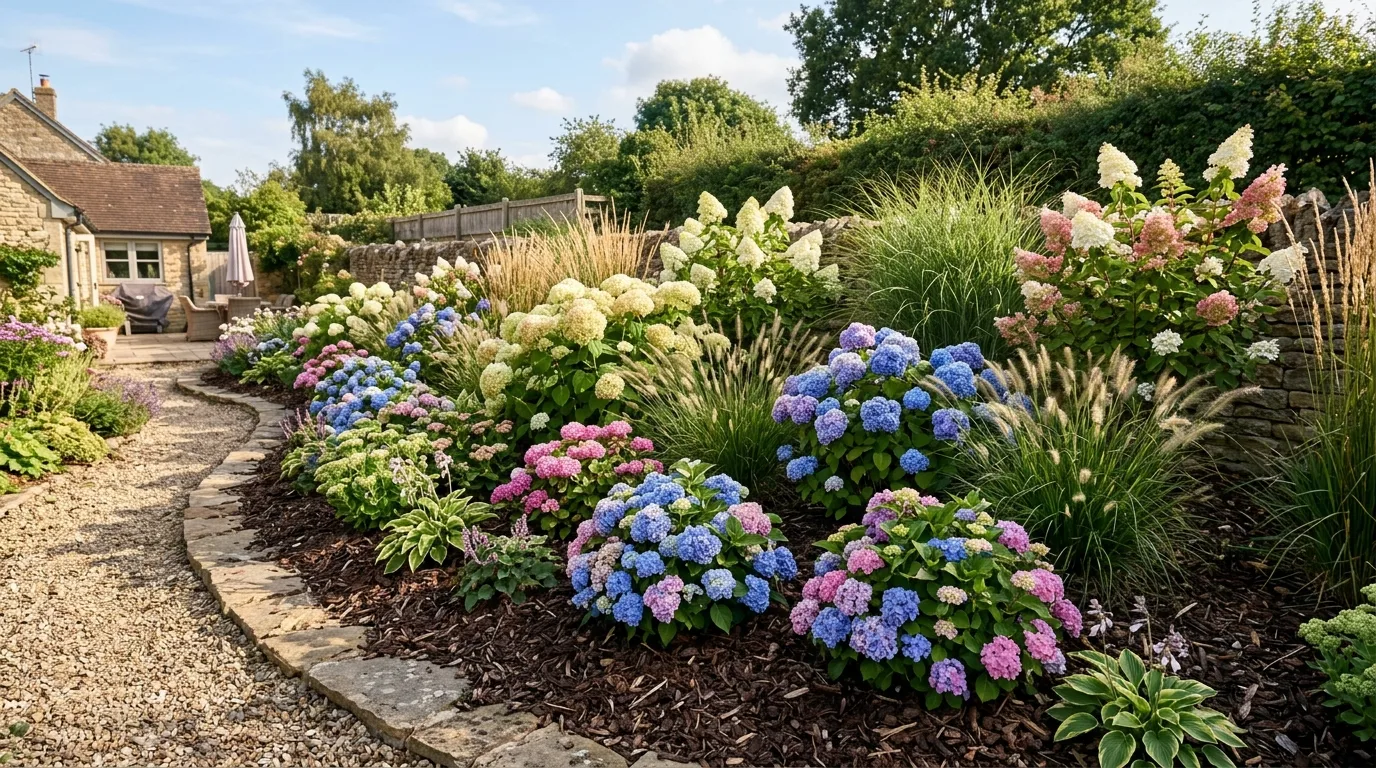
Hydrangeas With Low Green Texture
Pairing hydrangeas with lower green plants helps the blooms stand out more clearly.
Useful for balance.
Best for: layered beds
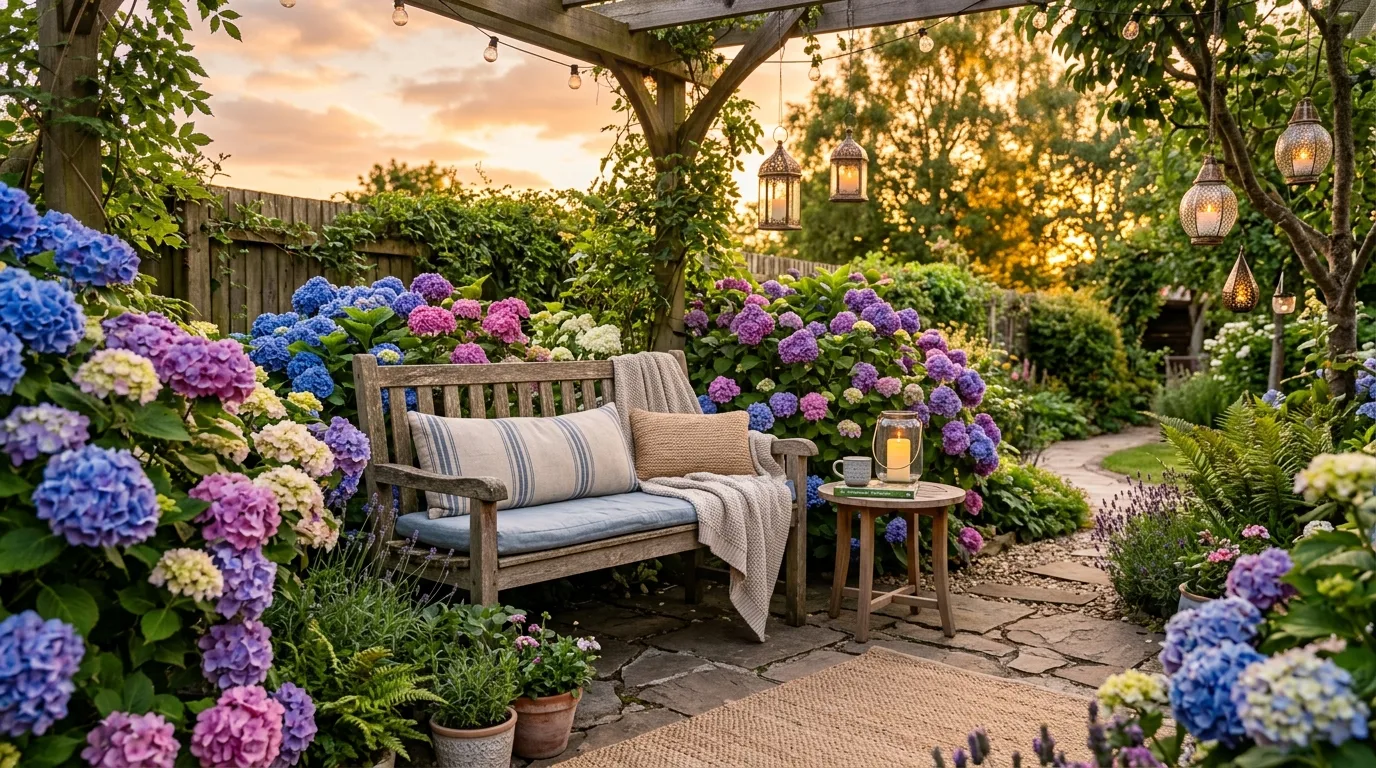
Hydrangea Corner Planting
A corner planting can turn hydrangeas into a focal point without overcomplicating the rest of the yard.
Simple but strong.
Best for: yard corners
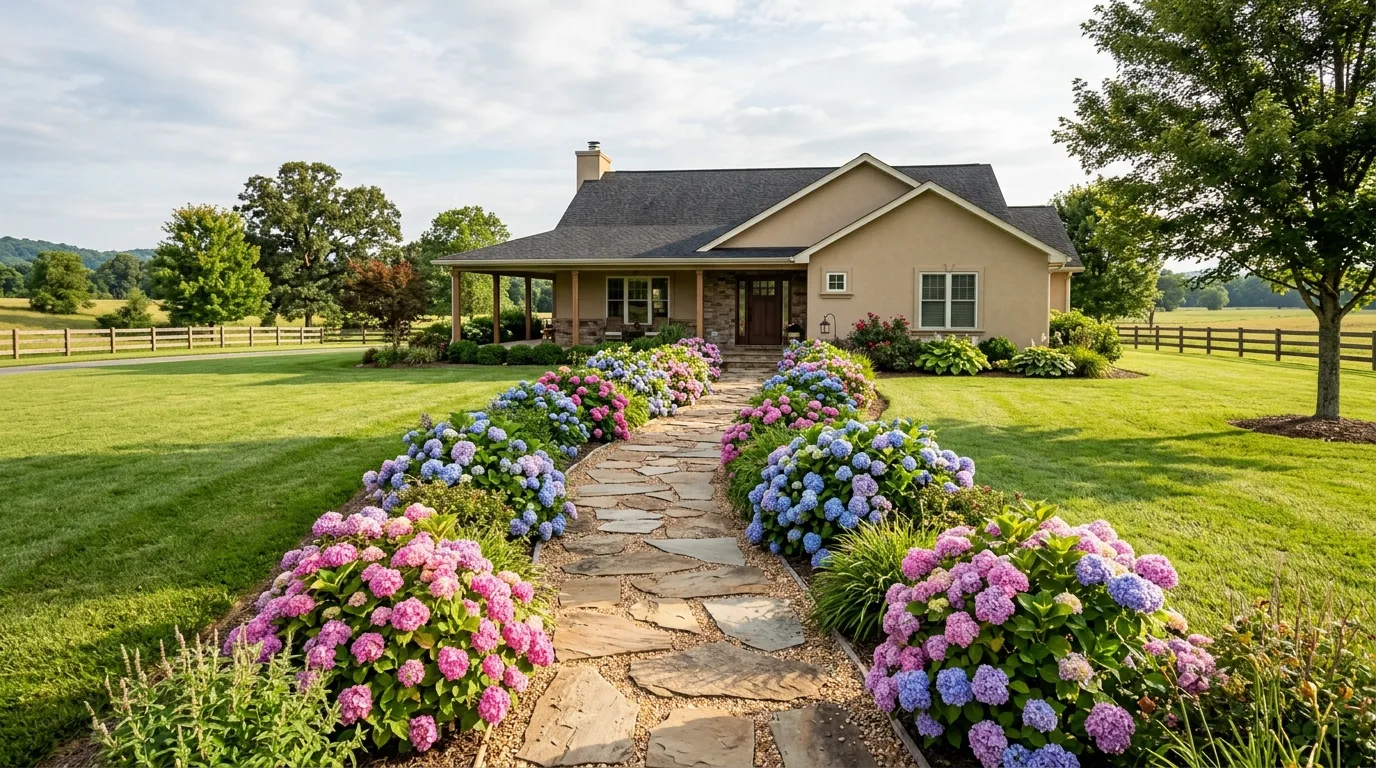
Mass Planting for a Stronger Color Effect
Grouping hydrangeas together creates a richer visual effect than spreading them too thinly.
Best for bigger impact.
Best for: larger spaces
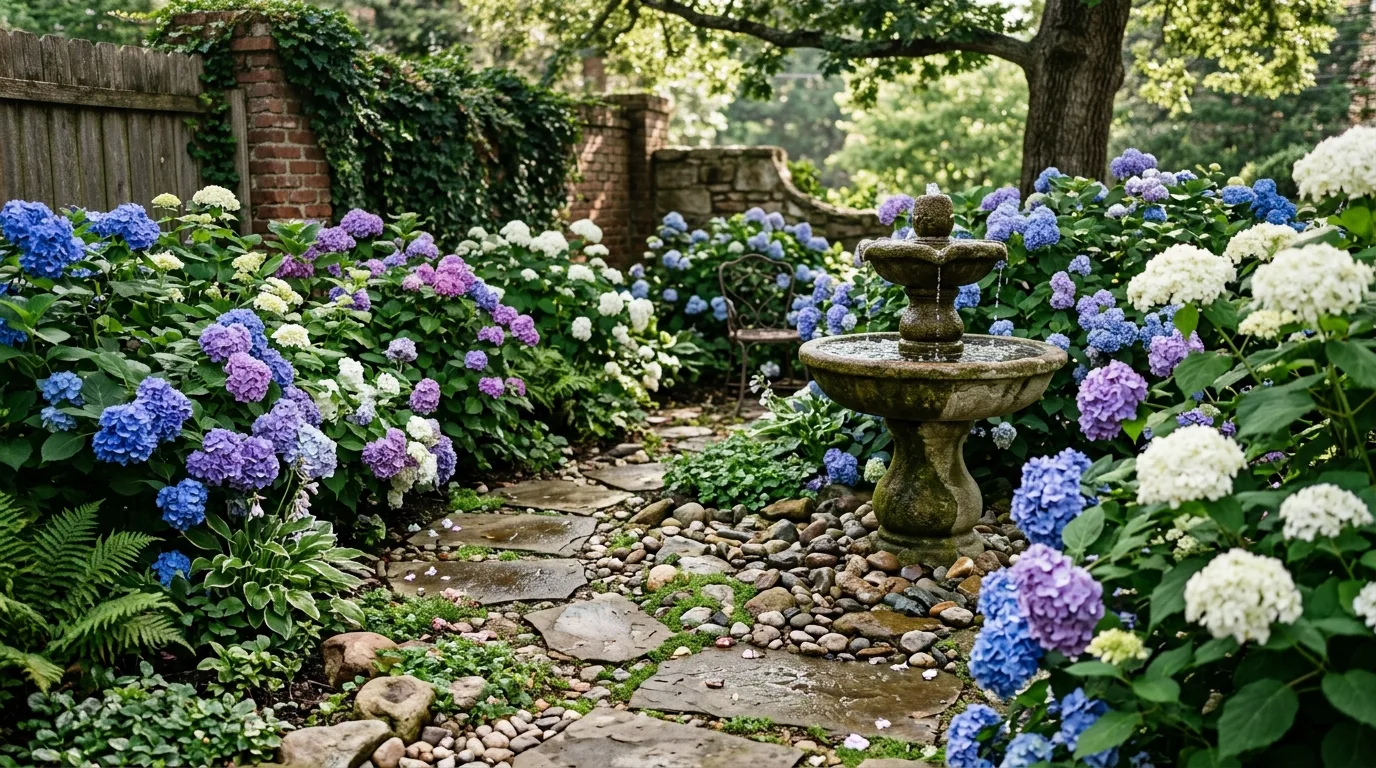
Complete Hydrangea Yard Composition
The best hydrangea landscapes balance bloom, greenery, and spacing so the planting feels lush but still controlled.
The fullest example here.
Best for: full garden planning
What makes hydrangea landscaping look better
Hydrangea landscaping looks better when the plants have enough room, enough repetition, and enough green support around them. Their blooms usually do the most work when the layout stays simple.