
Garden edging helps a landscape feel cleaner because it gives borders and beds a more deliberate finish. These ideas focus on edging choices that improve definition without making the yard feel overdesigned.
Why these ideas work
- Stone, brick, metal, wood, gravel transitions, concrete edges, and simple trench borders can all help create a cleaner landscape.
- Clear borders are one of the fastest visual upgrades.
- Edging works best when it fits the rest of the yard materials.
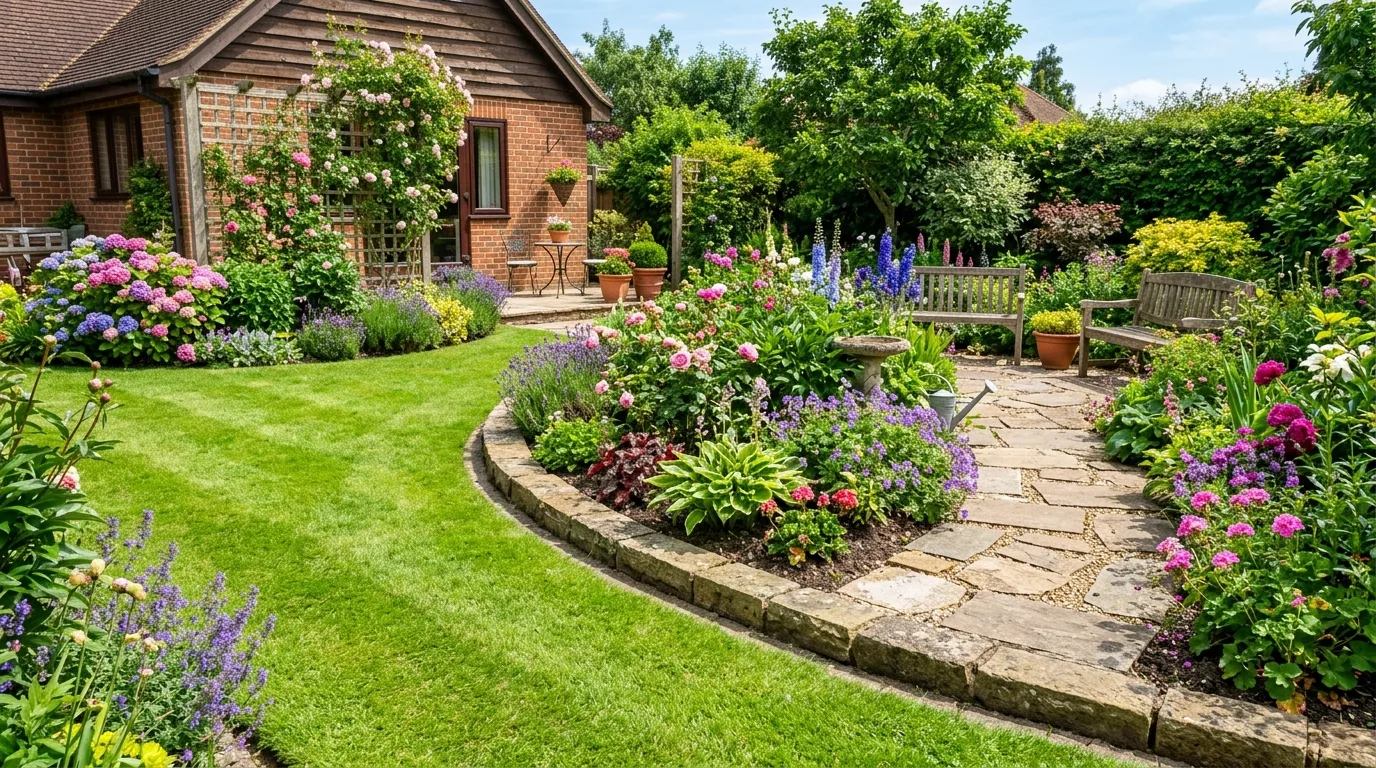
Stone Edging for Strong Definition
Stone edging gives planting beds a solid, finished look that reads clearly from a distance.
A classic clean edge.
Best for: front and side beds
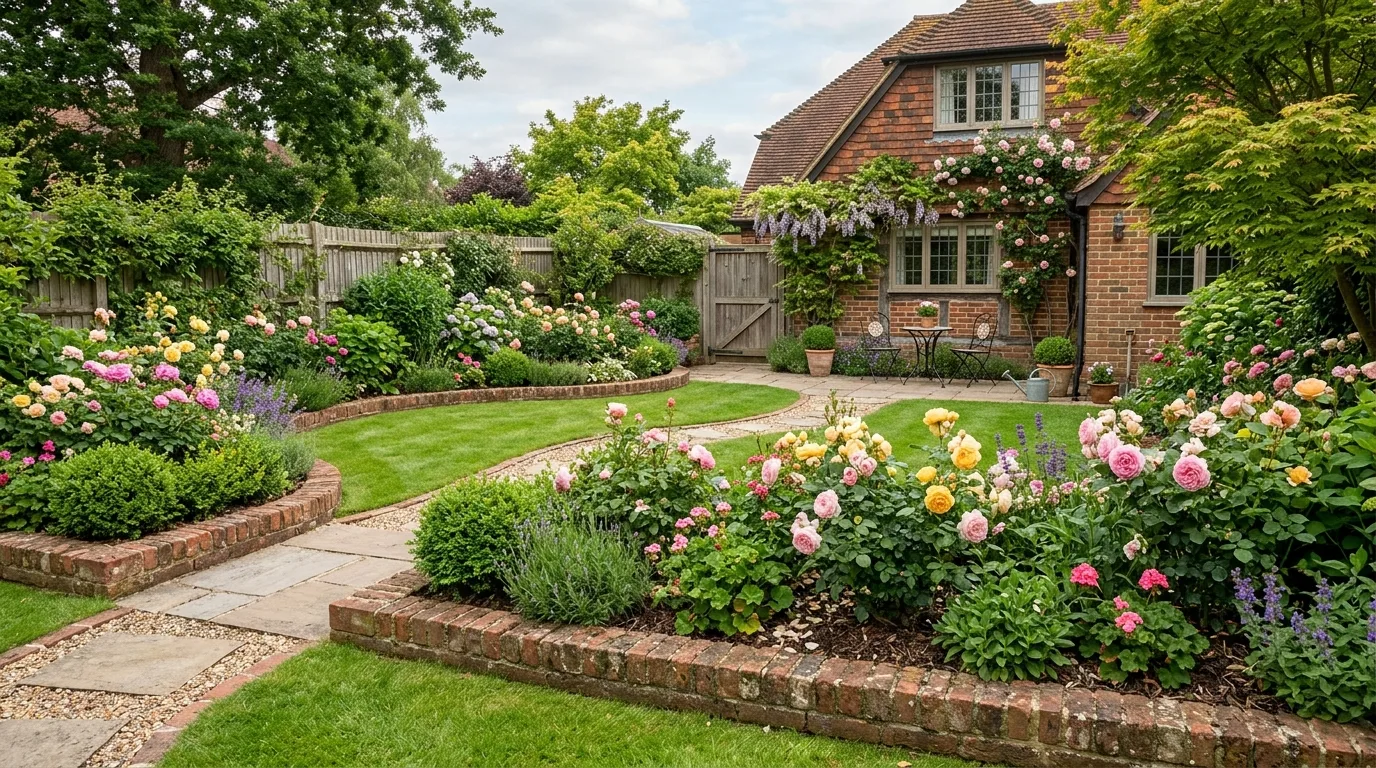
Brick Border for a Traditional Finish
Brick edging adds neatness and a slightly more formal structure to the landscape.
Good for traditional homes.
Best for: formal beds
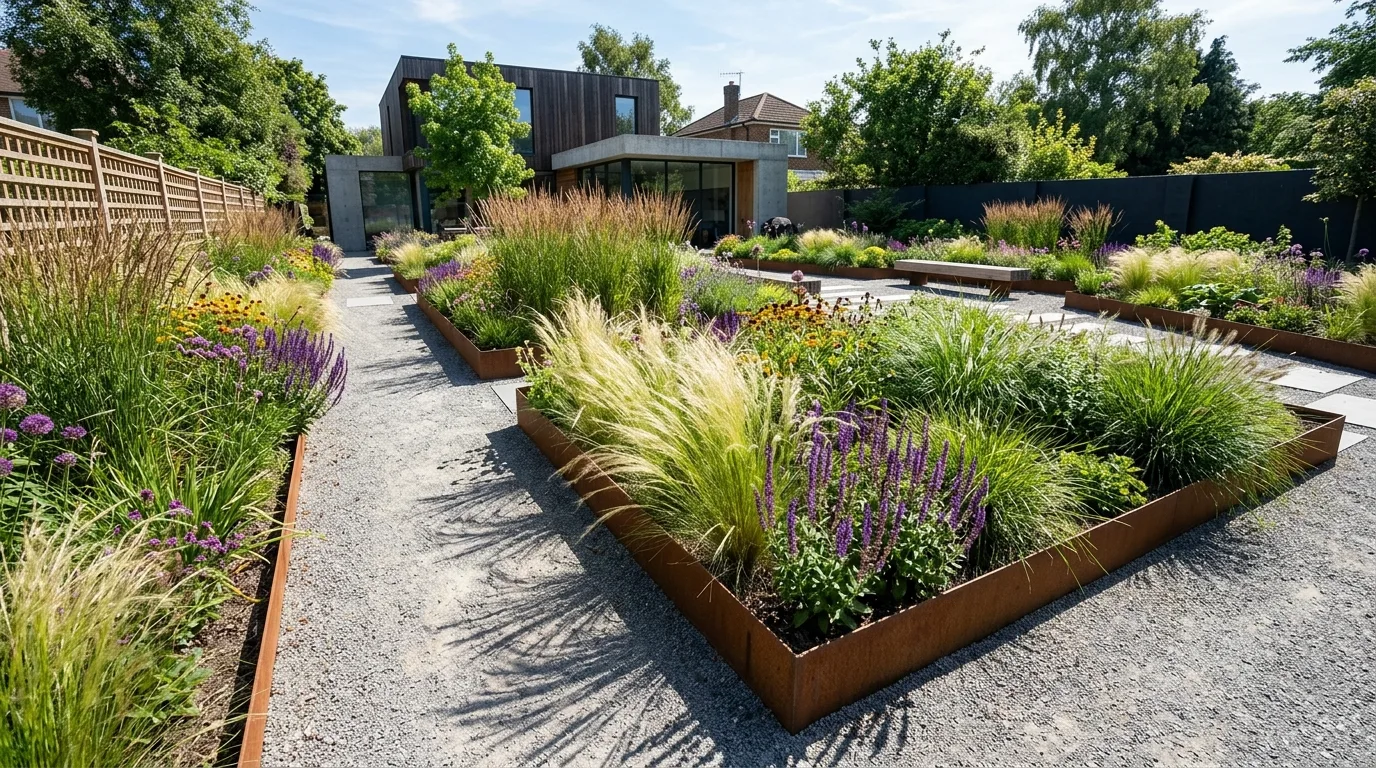
Metal Edging for a Crisp Modern Line
Metal edging keeps the lines sharp and works well in more modern landscapes.
Very clean visually.
Best for: modern yards
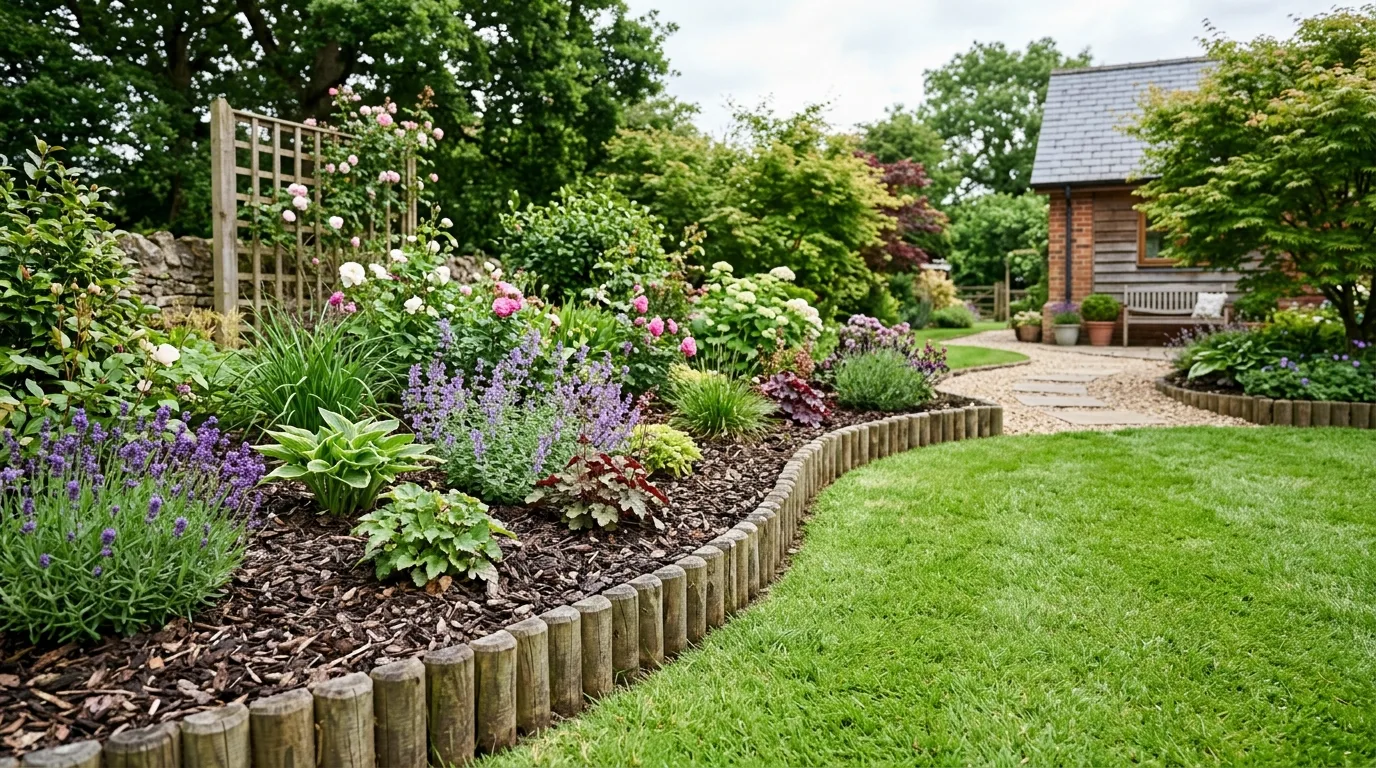
Wood Edging for a Softer Border
Wood edging feels warmer than metal or stone while still helping the beds feel more organized.
A nice natural option.
Best for: garden-focused spaces
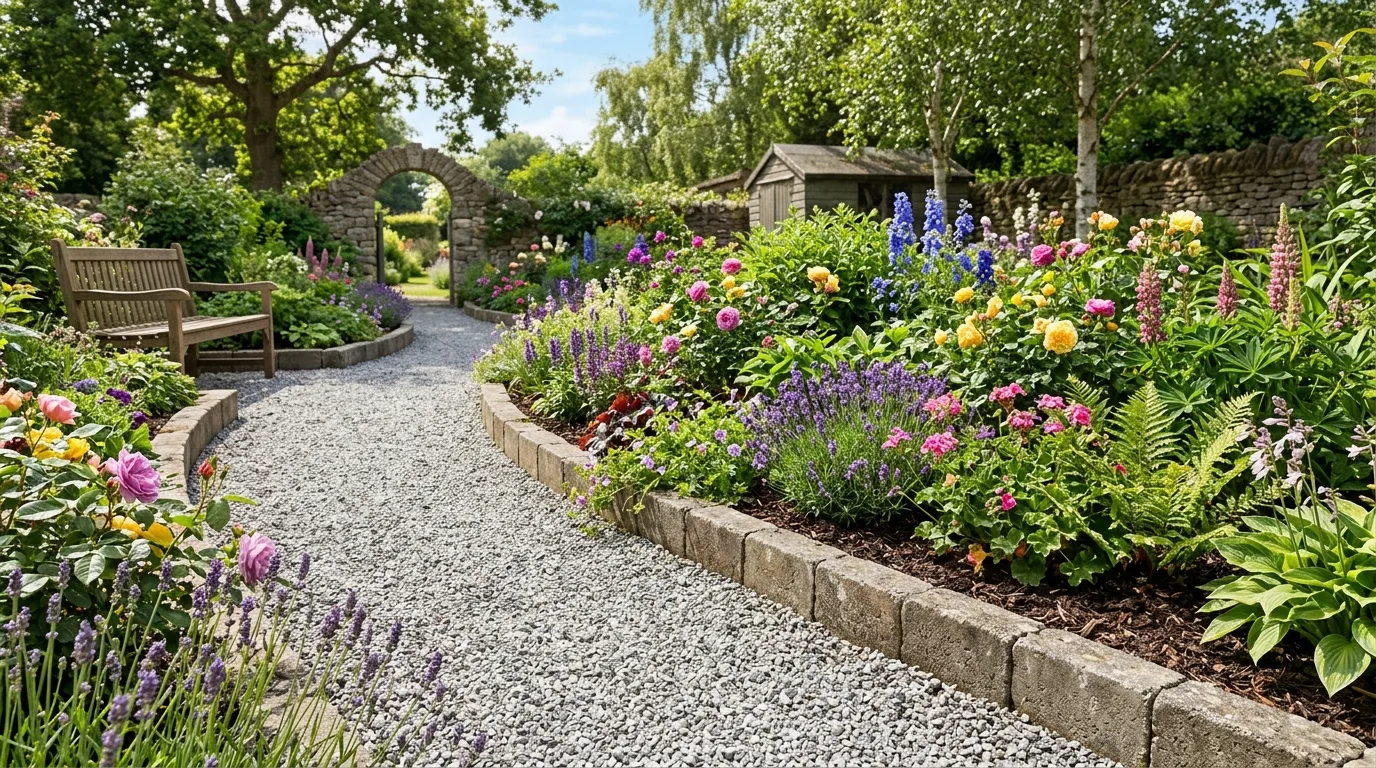
Concrete Edge for Lasting Structure
Concrete edging creates a very strong line and can hold up well over time.
A durable solution.
Best for: long-term landscaping
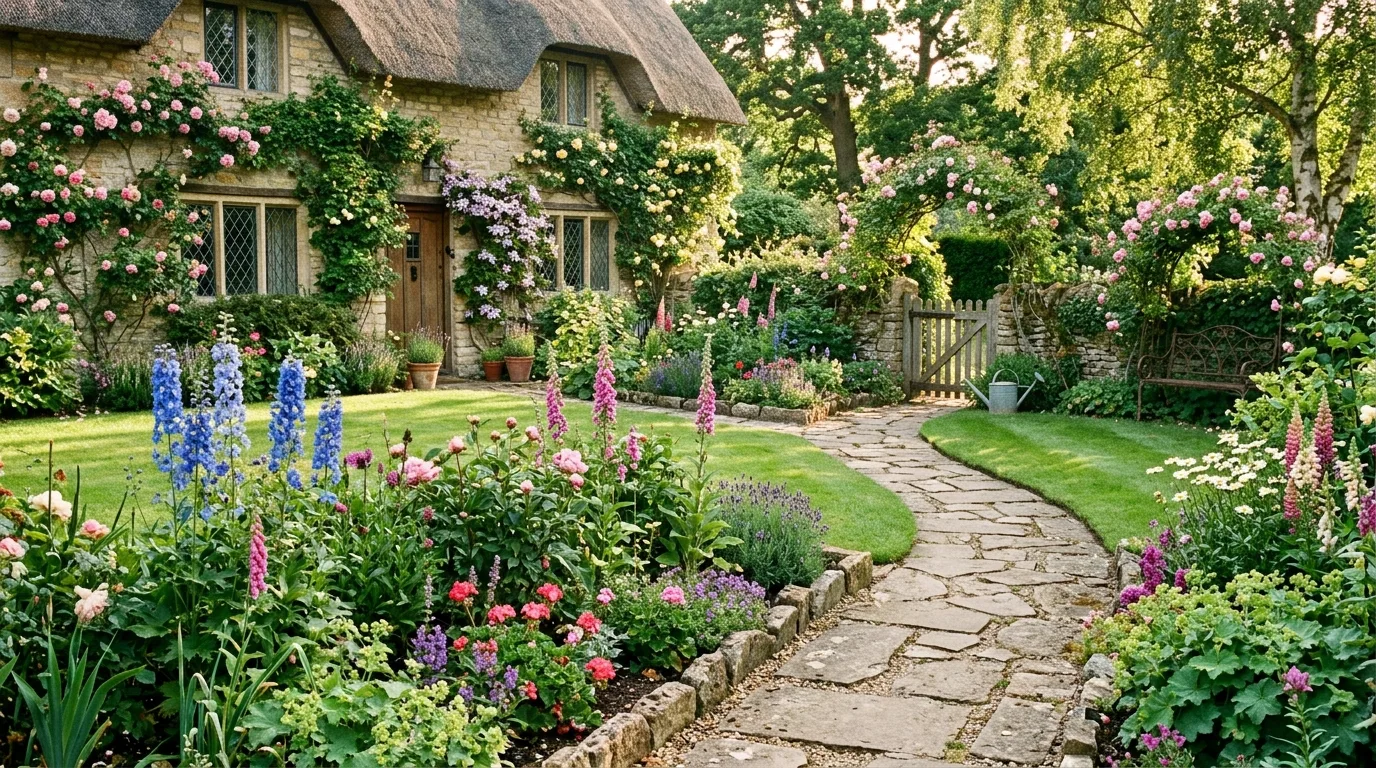
Simple Trench Edge for Minimal Cost
A trench edge can still look very clean when it is cut sharply and maintained well.
A low-cost option.
Best for: budget landscapes
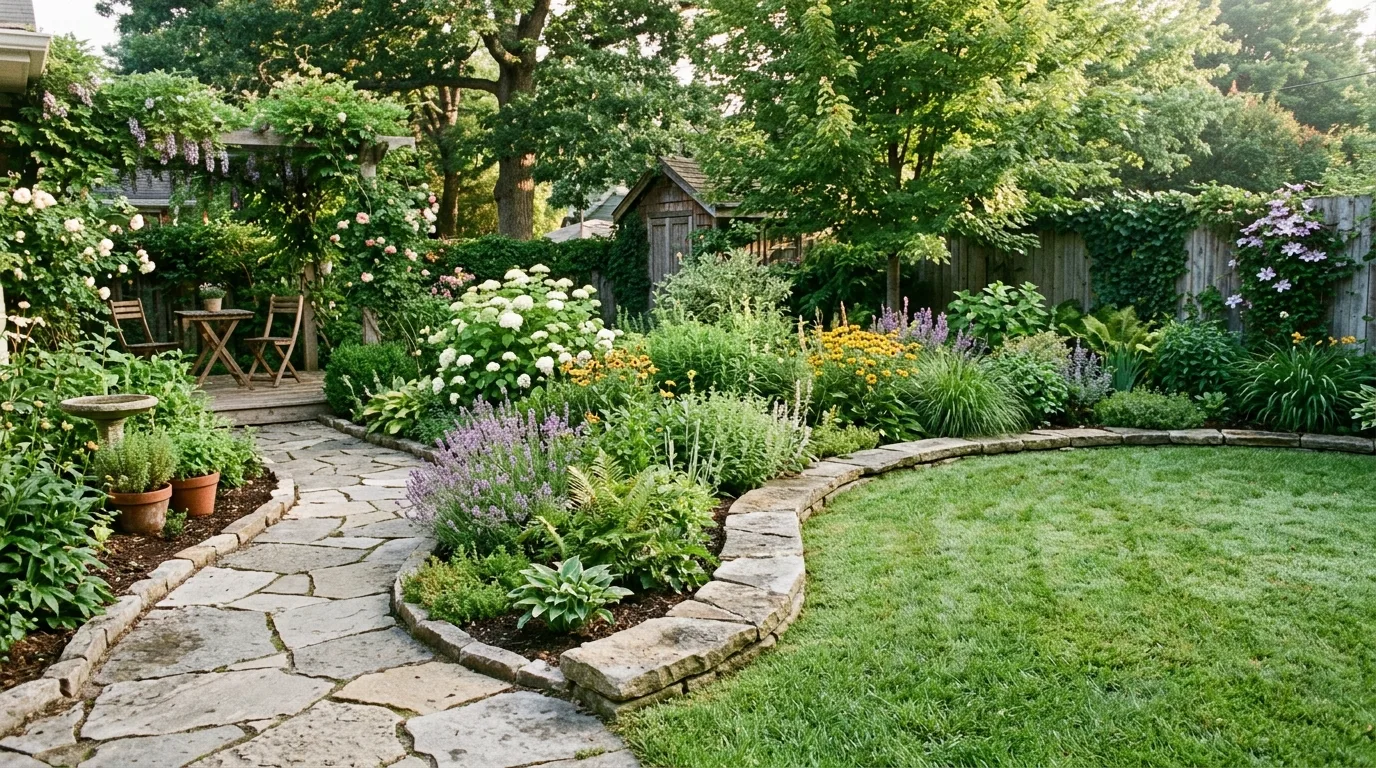
Complete Edging Strategy for a Clean Yard
The best edging ideas match the materials and shapes already present in the landscape.
The fullest example here.
Best for: whole-yard tidying
Why edging makes such a big difference in a landscape
Edging makes a landscape feel cleaner because it separates lawn, paths, and planting with clearer lines. The strongest edging choices support the style of the yard while also reducing visual mess.