
A drought-tolerant front yard should still look attractive and complete even with lower water needs. These ideas focus on gravel, mulch, hardy plants, simple shapes, and low-water layouts that make the front of the house easier to manage.
Why these ideas work
- Gravel, decomposed granite, mulch, ornamental grasses, hardy shrubs, and succulents are common drought-tolerant elements.
- A smaller plant palette often looks better in dry-climate landscaping.
- Strong shapes help low-water yards feel intentional.
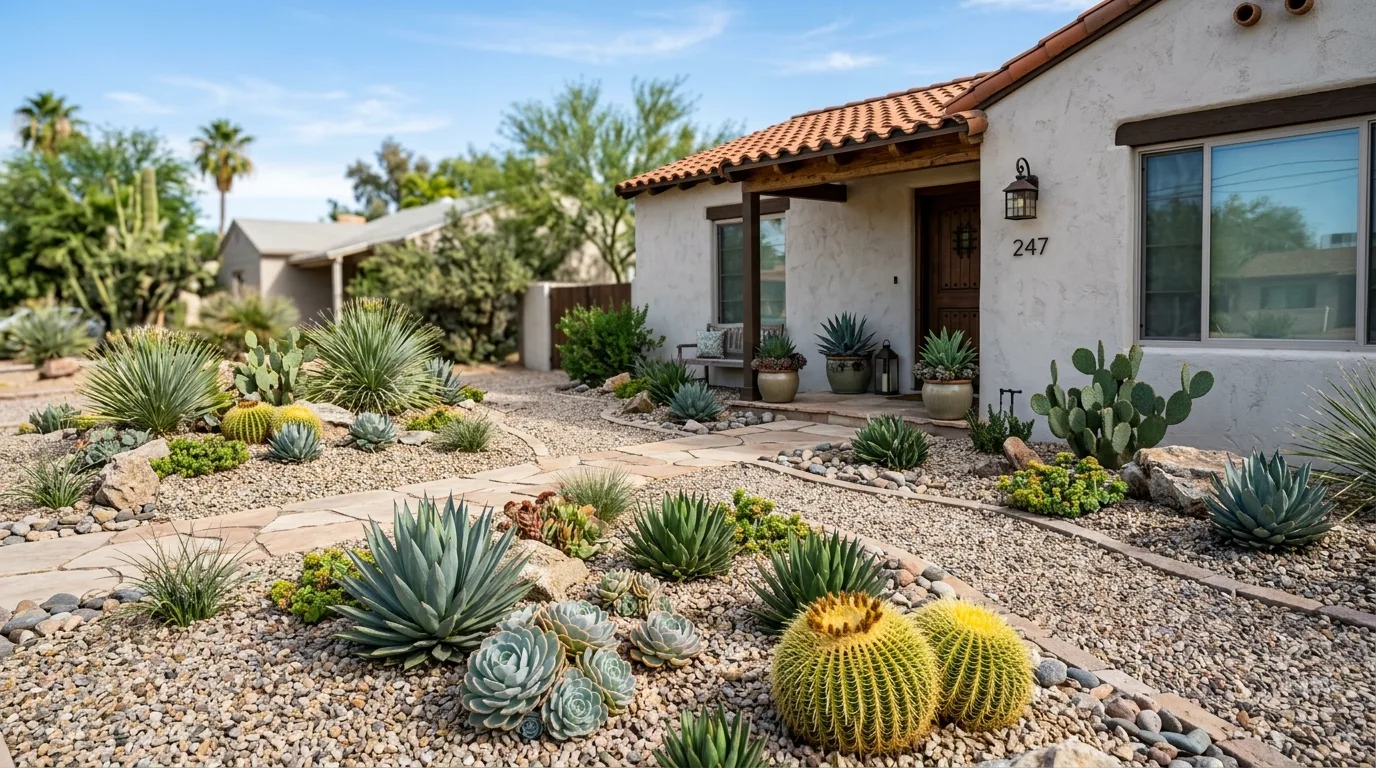
Gravel Front Yard With Structured Planting
Gravel gives the front yard a clean low-water base and helps the plants stand out more clearly.
A very practical foundation.
Best for: dry climates
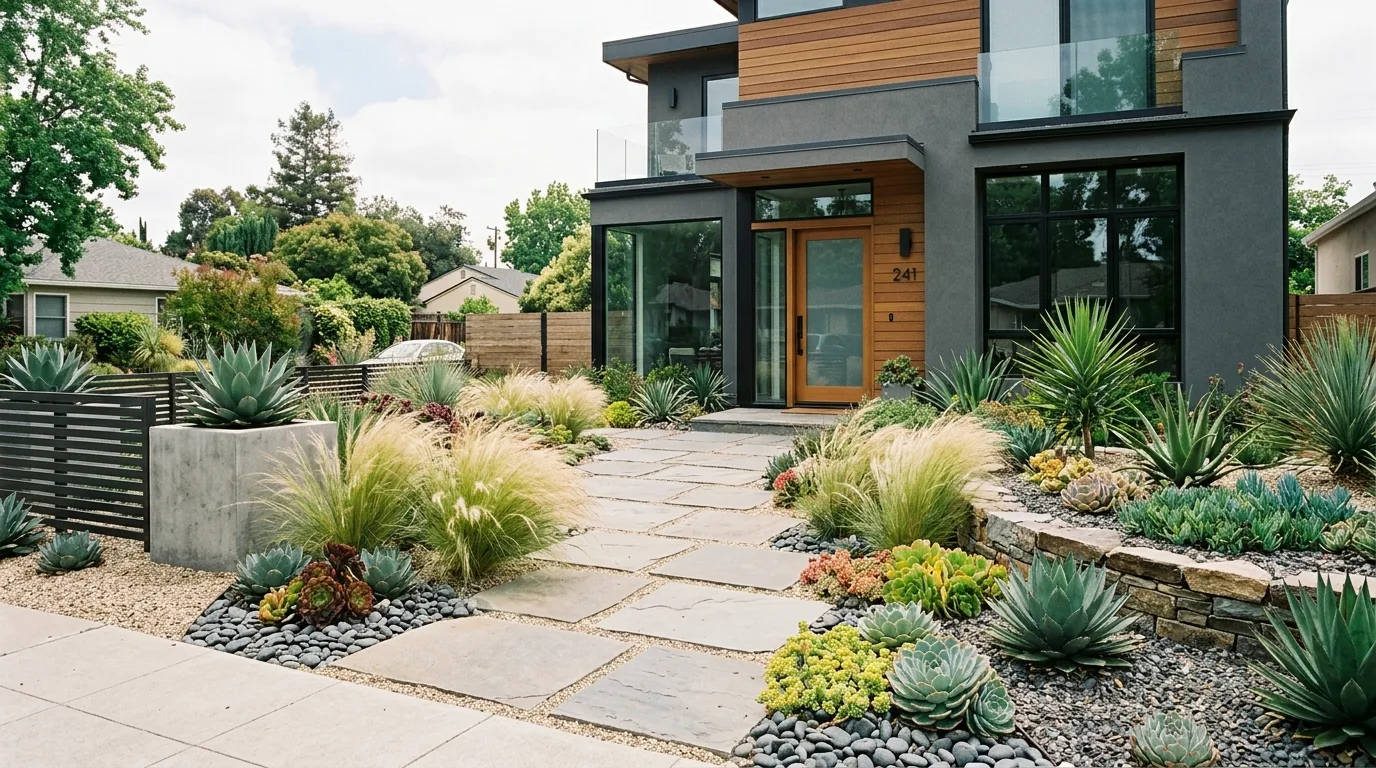
Succulent-Focused Entry Planting
Succulents can create a crisp modern look while keeping the front landscape lower maintenance and lower water use.
Best with strong spacing.
Best for: modern homes
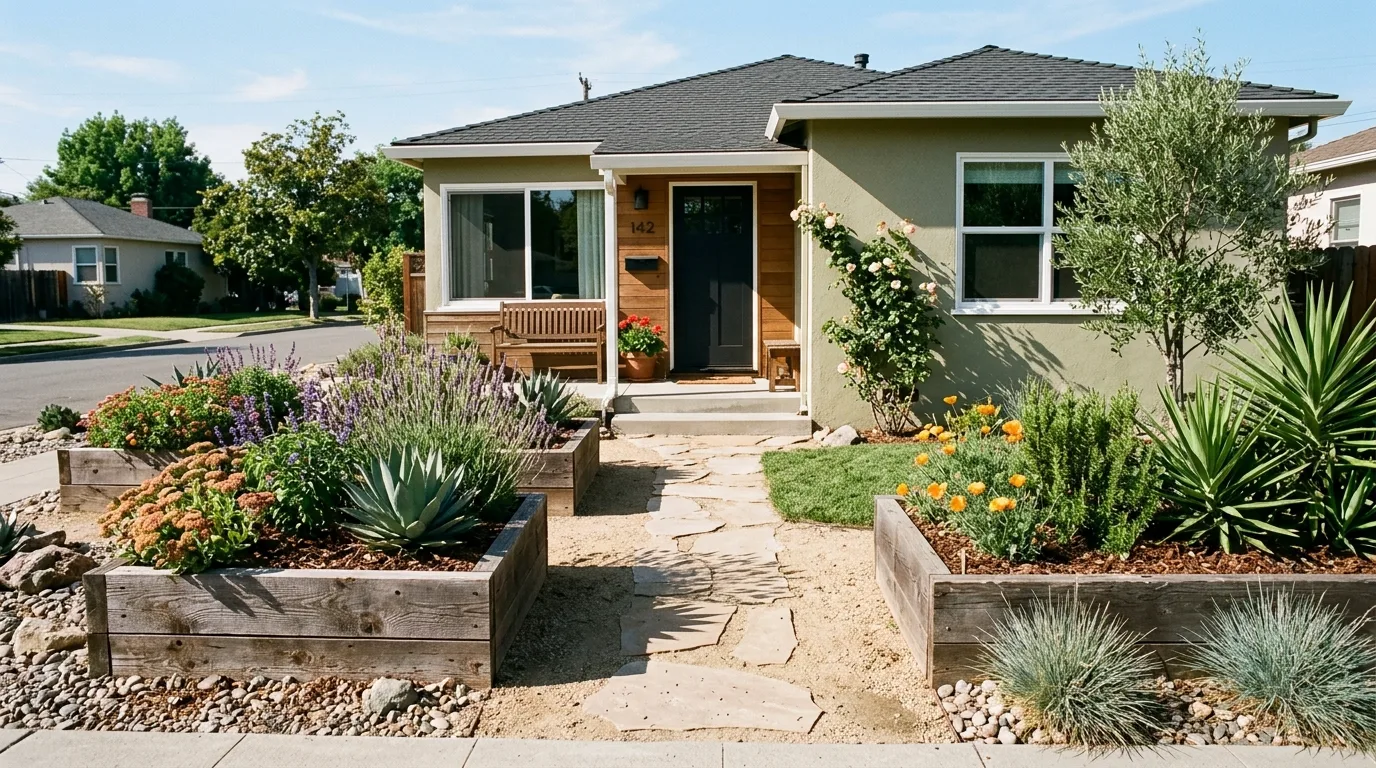
Mulch Beds With Hardy Shrubs
Mulch helps hold moisture and gives the yard a warmer, softer look than a larger lawn.
Very approachable for many homes.
Best for: easy-care fronts
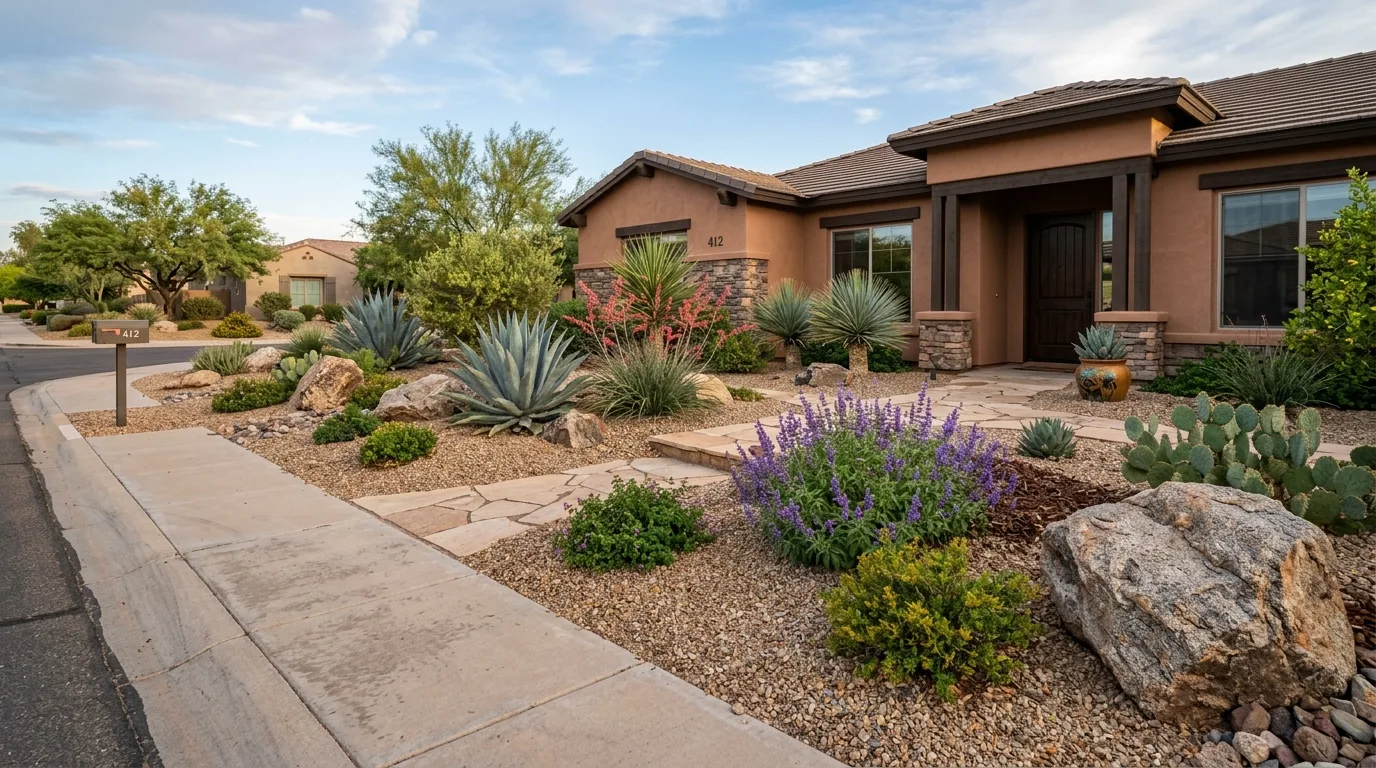
Ornamental Grass Front Border
Grasses add movement and texture while handling dry conditions better than thirstier planting schemes.
A good texture layer.
Best for: simple front borders
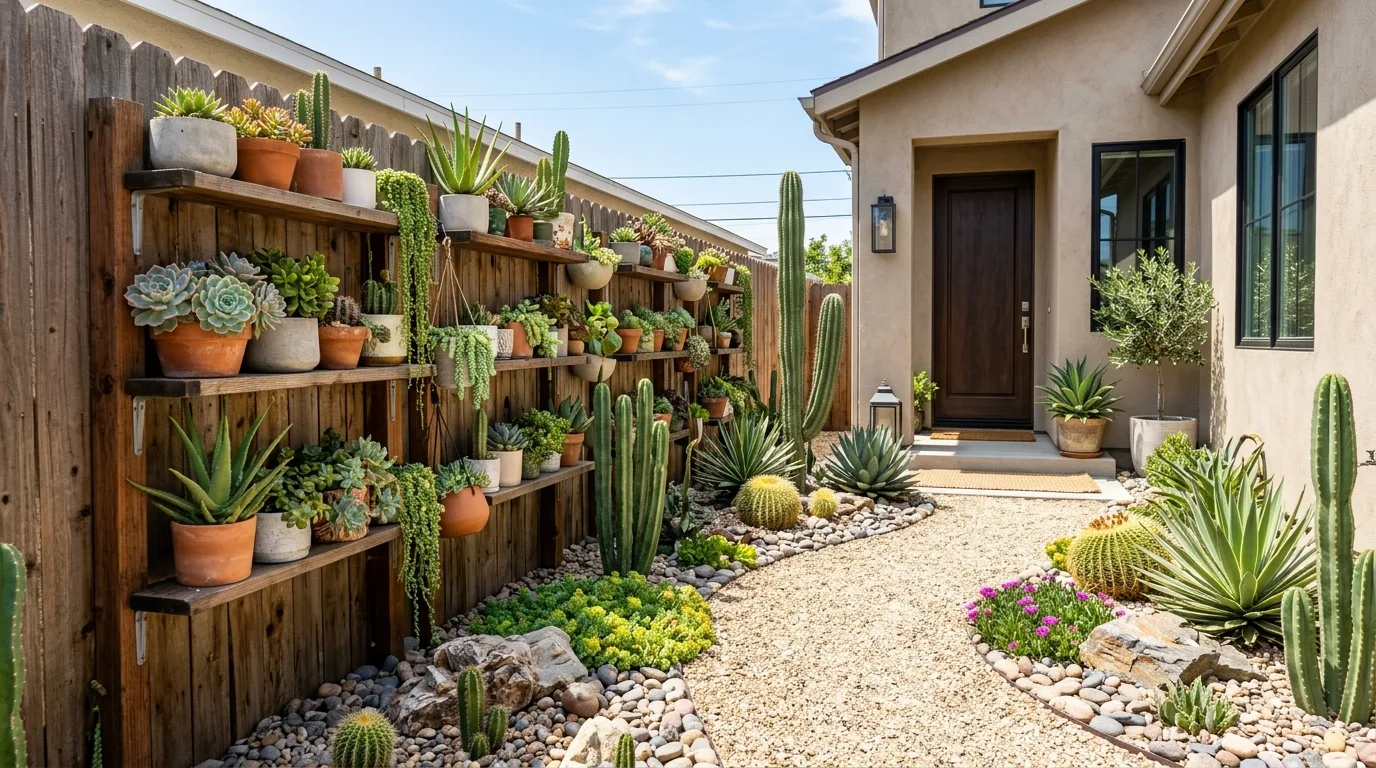
Stone and Plant Mix for Visual Contrast
Combining stone surfaces with hardy planting creates a front yard that feels styled instead of sparse.
Useful for balance.
Best for: minimalist landscapes
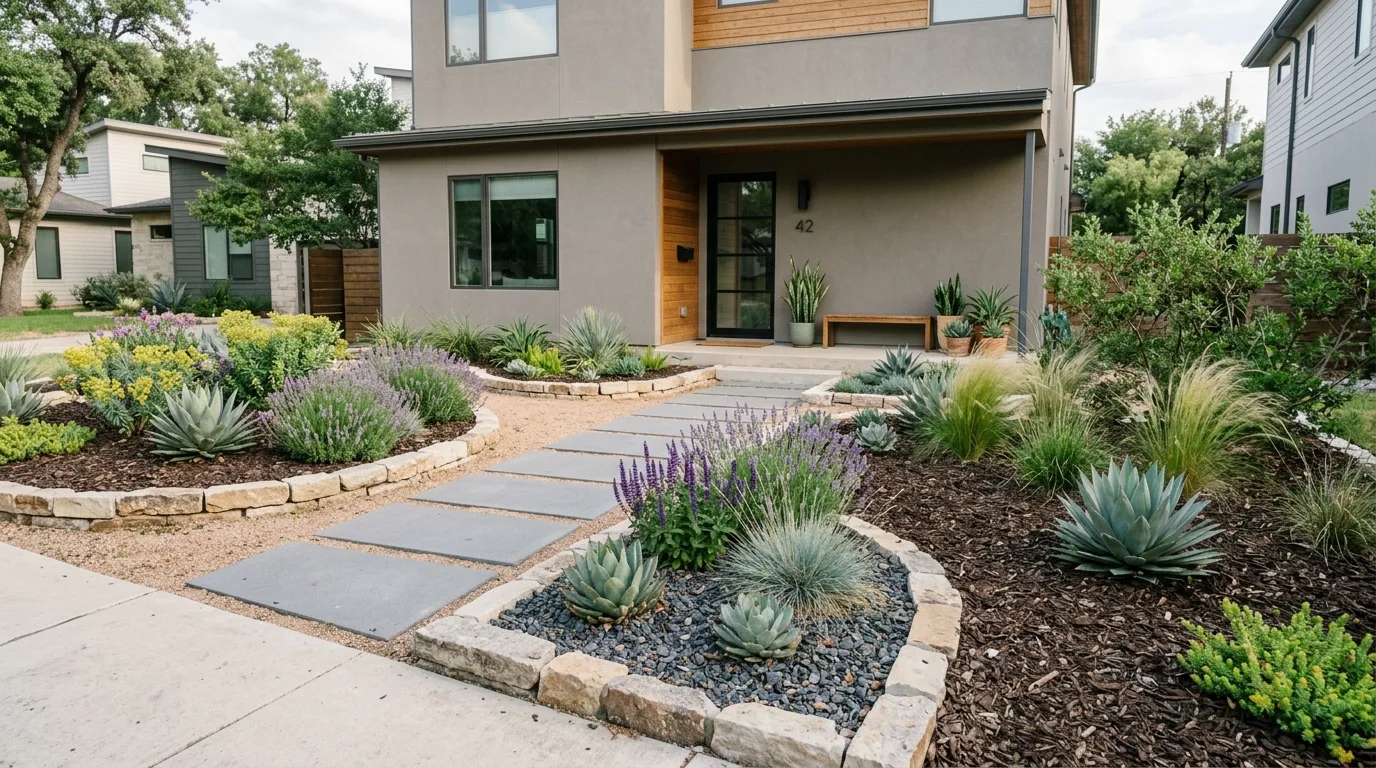
Low-Water Walkway Planting
Lining a front path with drought-tolerant plants improves curb appeal while keeping the maintenance simple.
Great for entry focus.
Best for: walkway fronts
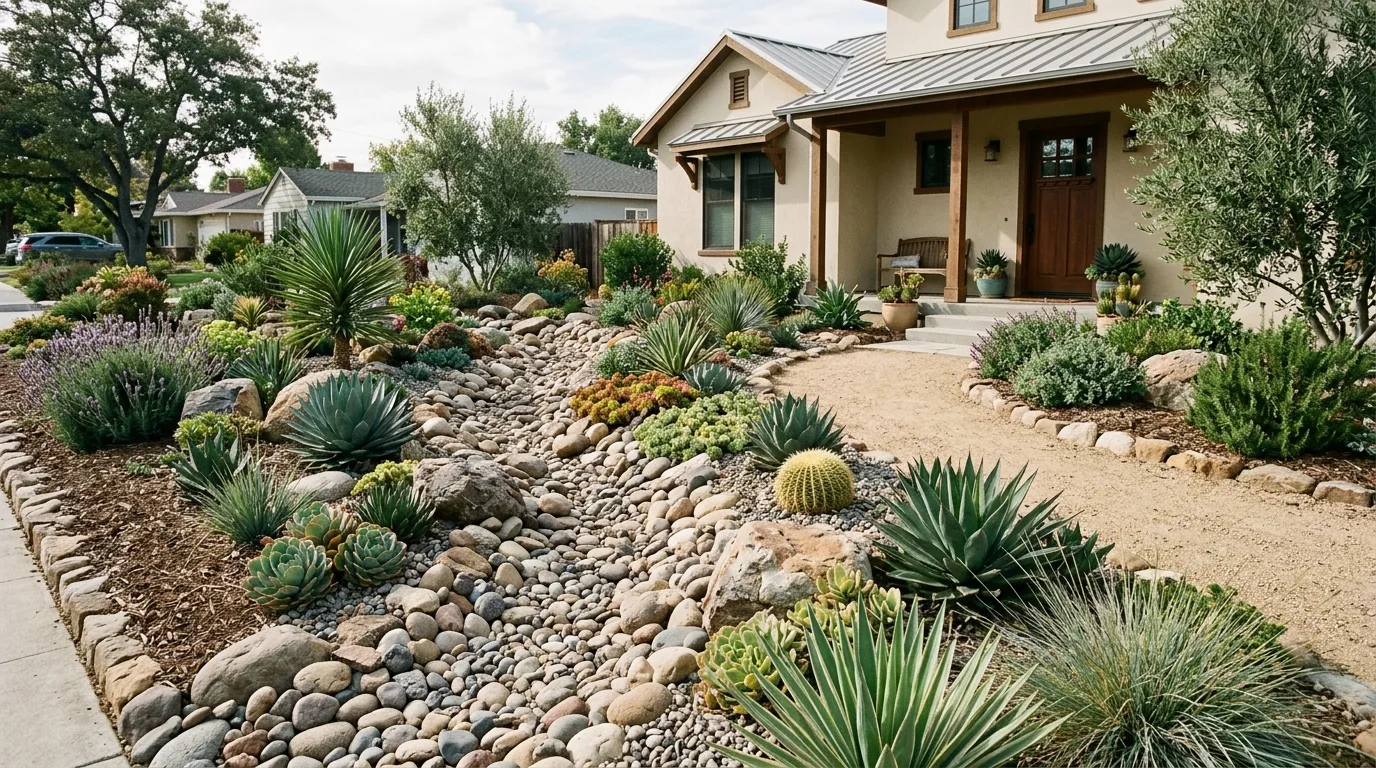
Reduced Lawn With Dry Garden Zones
Shrinking the lawn can make the front yard more water-smart without making it feel bare.
A smart long-term move.
Best for: water-saving upgrades
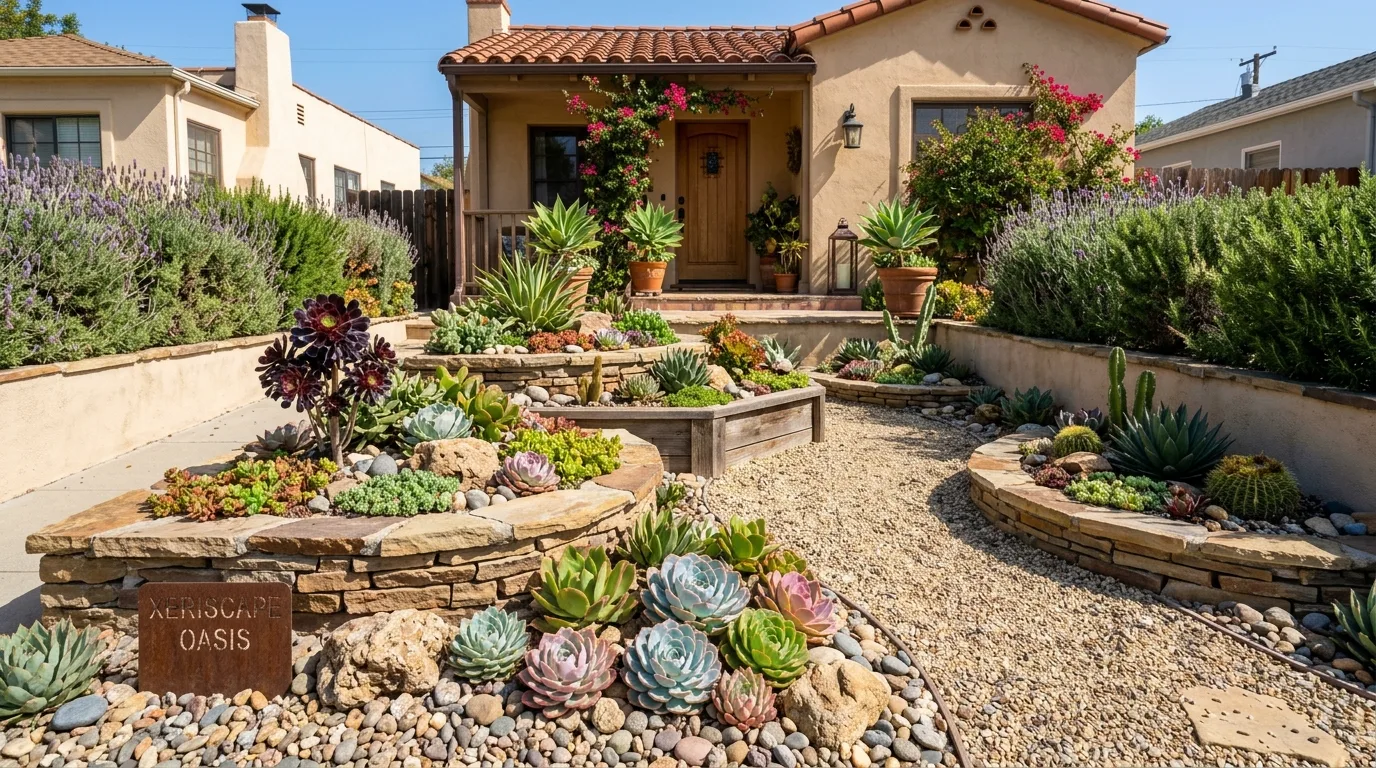
Modern Dry Garden With Clean Lines
A front yard with clear geometric lines and controlled planting often looks more refined in dry-tolerant designs.
Very effective with restraint.
Best for: modern curb appeal
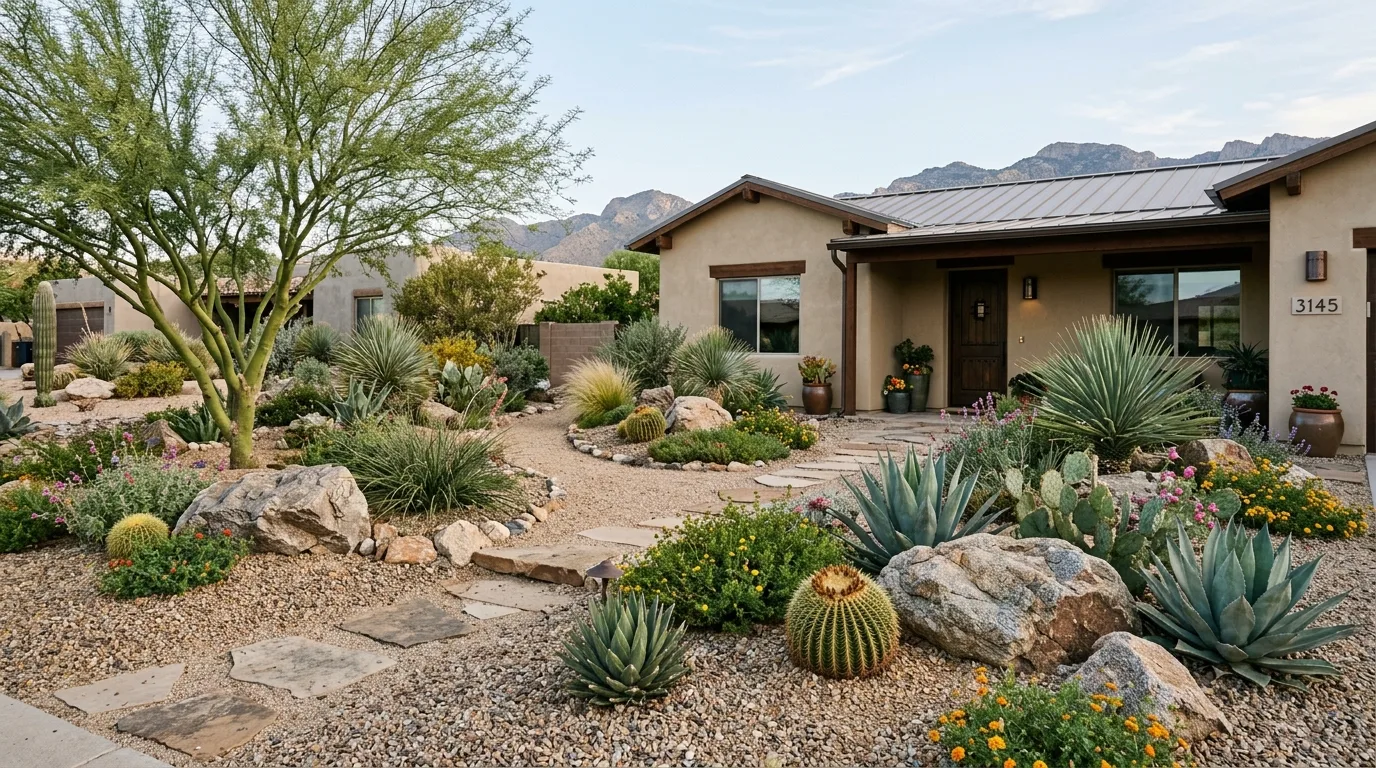
Rock Garden Accent Near the Entry
A small rock garden section can become a low-water focal point that strengthens the whole front yard design.
Best used intentionally.
Best for: accent areas
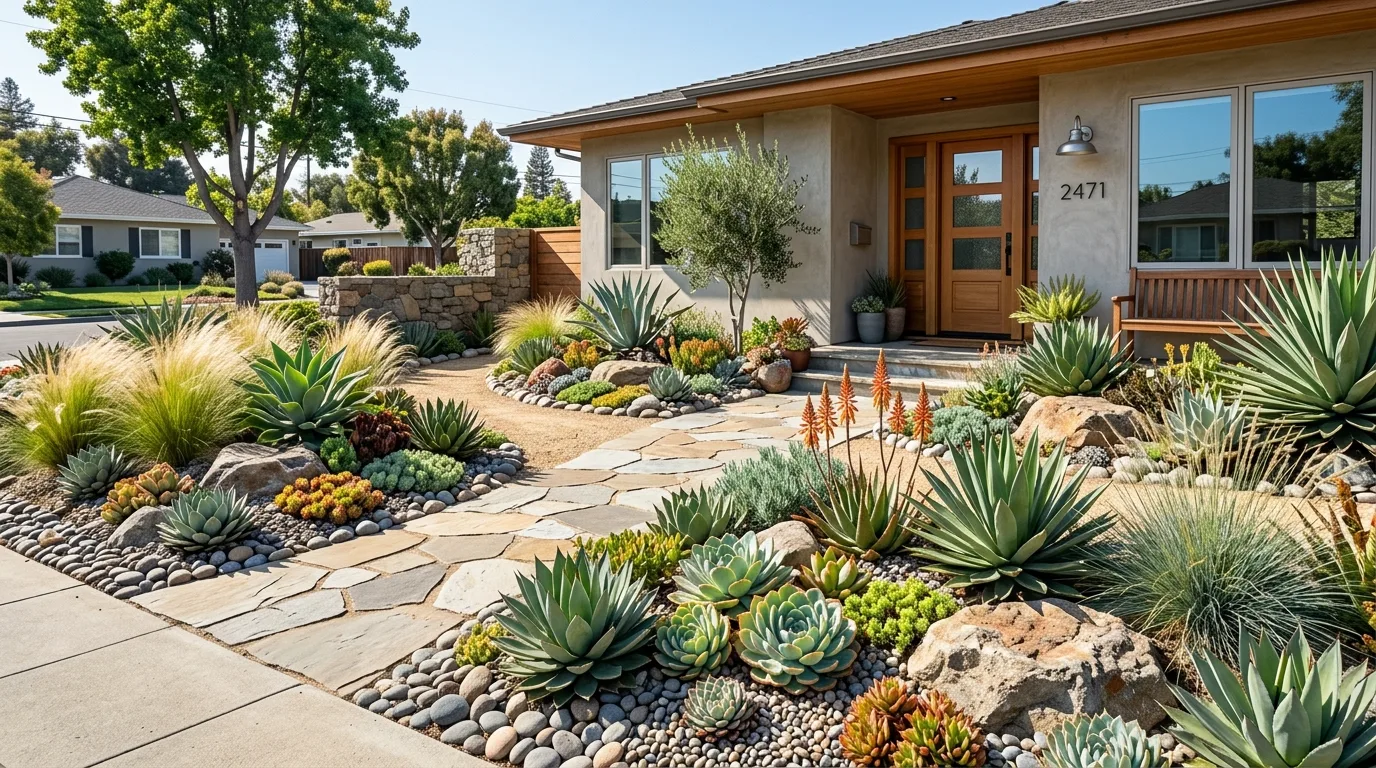
Complete Drought-Tolerant Front Yard Plan
The strongest drought-tolerant front yards combine low-water materials, durable plants, and a clear structure that still feels inviting.
The fullest example here.
Best for: complete front-yard redesign
What makes a drought-tolerant front yard look complete
A drought-tolerant front yard looks complete when the hardscape and planting support each other. Clear shapes, good spacing, and a limited palette usually create the strongest result.