
Boxwood gives a garden a timeless structure that few plants can match. The best boxwood ideas use shape and repetition to create a classic look without making the whole space feel too rigid.
Why these ideas work
- Boxwood suits borders, topiaries, parterres, formal paths, and symmetrical garden layouts.
- A little boxwood can do a lot because its shape carries strong visual weight.
- Classic gardens often rely on boxwood to hold the design together.
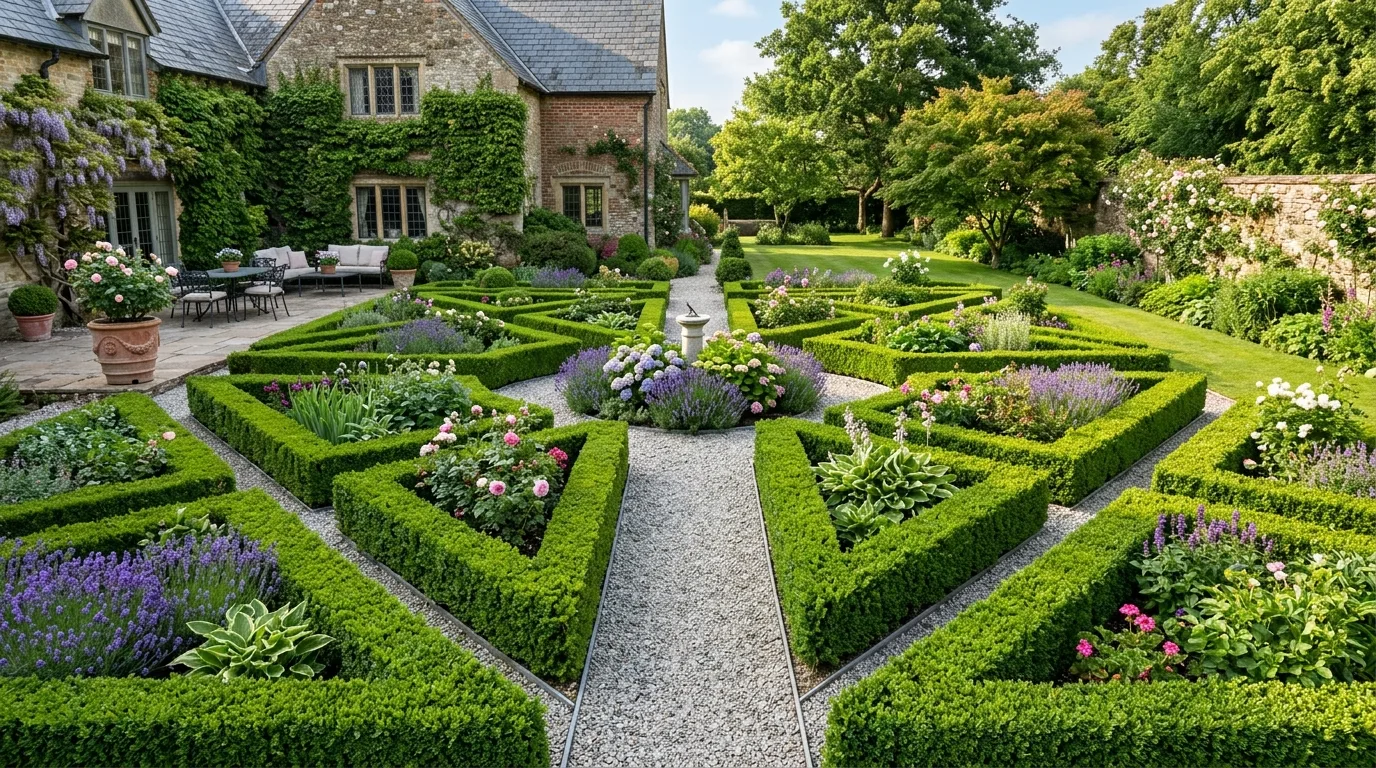
Geometric Boxwood Hedges
Geometric boxwood hedges create an immediately classic and formal garden look through shape alone.
A very strong design anchor.
Best for: formal garden structure
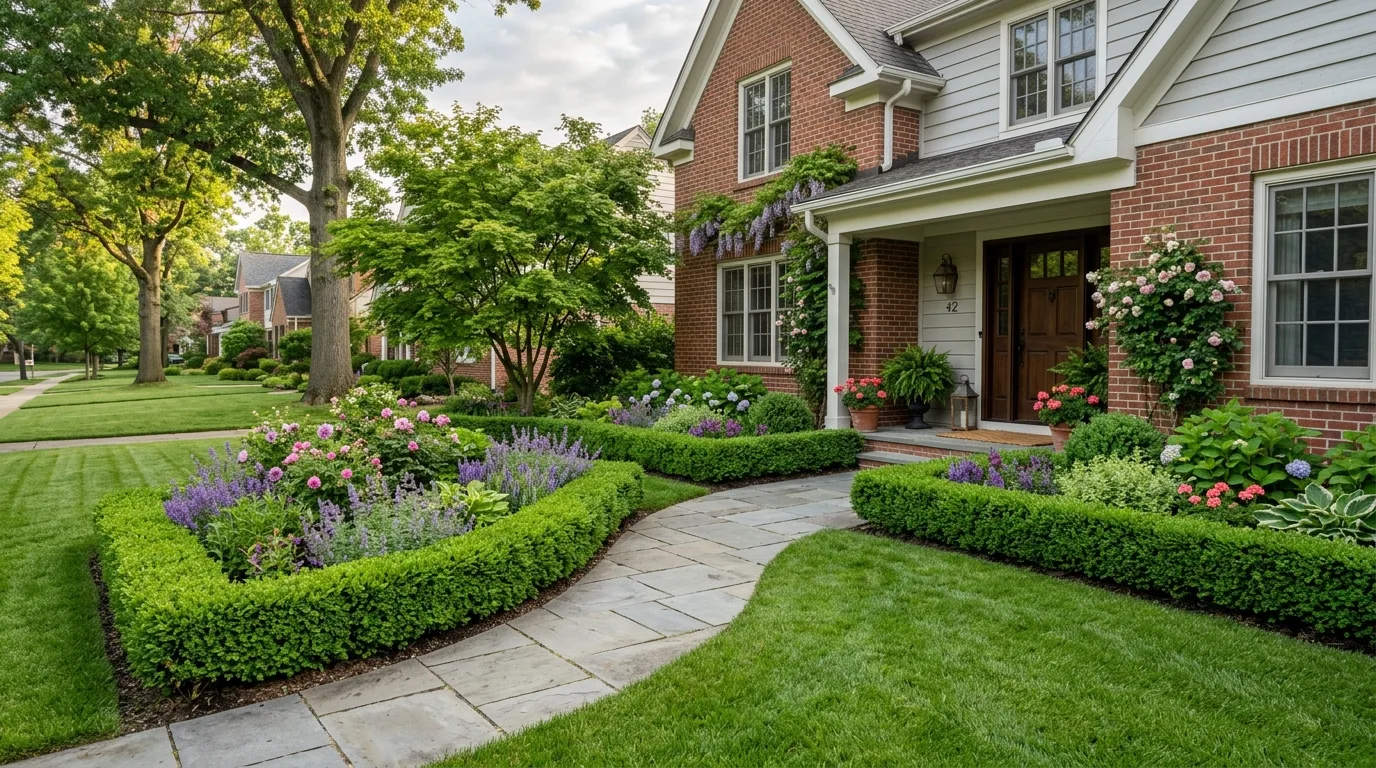
Low Boxwood Borders
Low borders define flower beds neatly without taking attention away from the planting inside them.
A good all-around use of boxwood.
Best for: bed definition
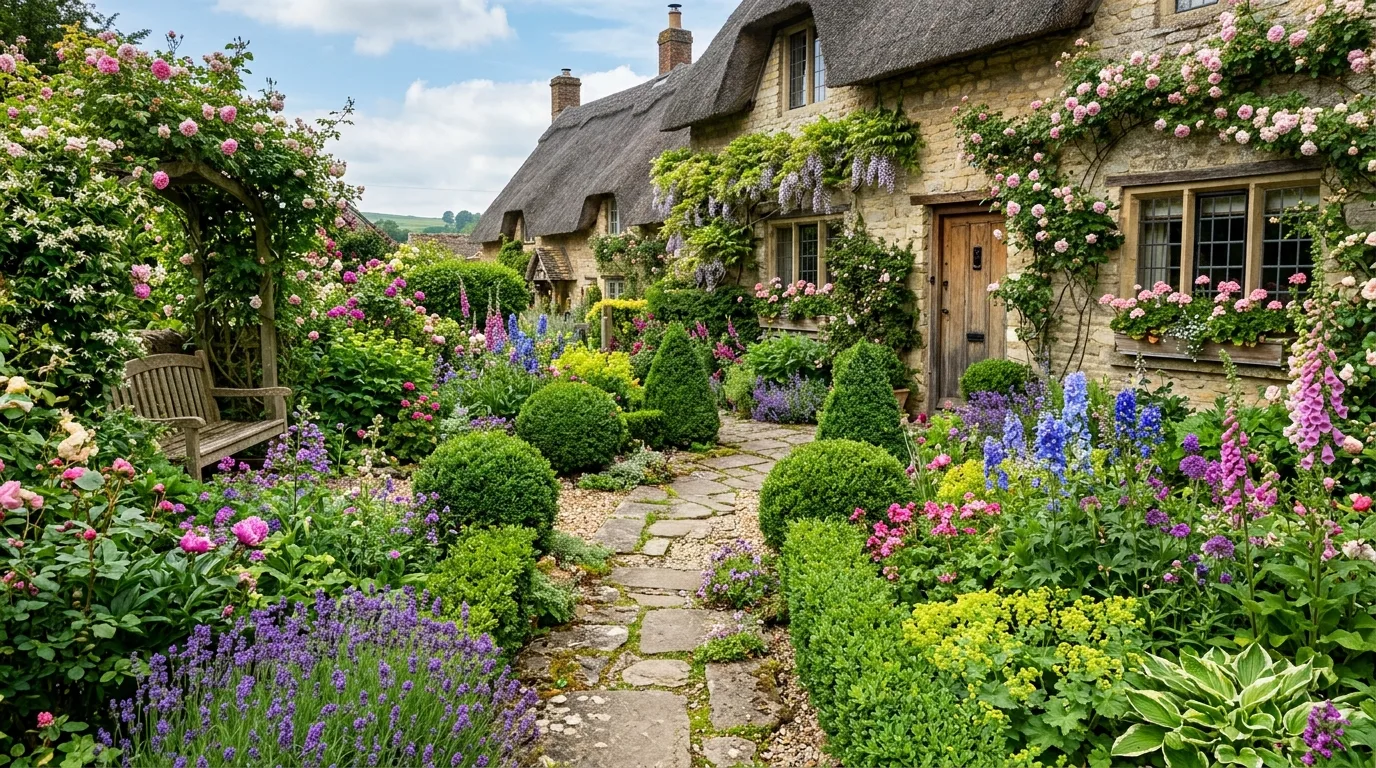
Boxwood Topiaries
Topiary turns boxwood into a decorative feature and adds more elegance to a classic garden layout.
Best when used with restraint.
Best for: formal accents
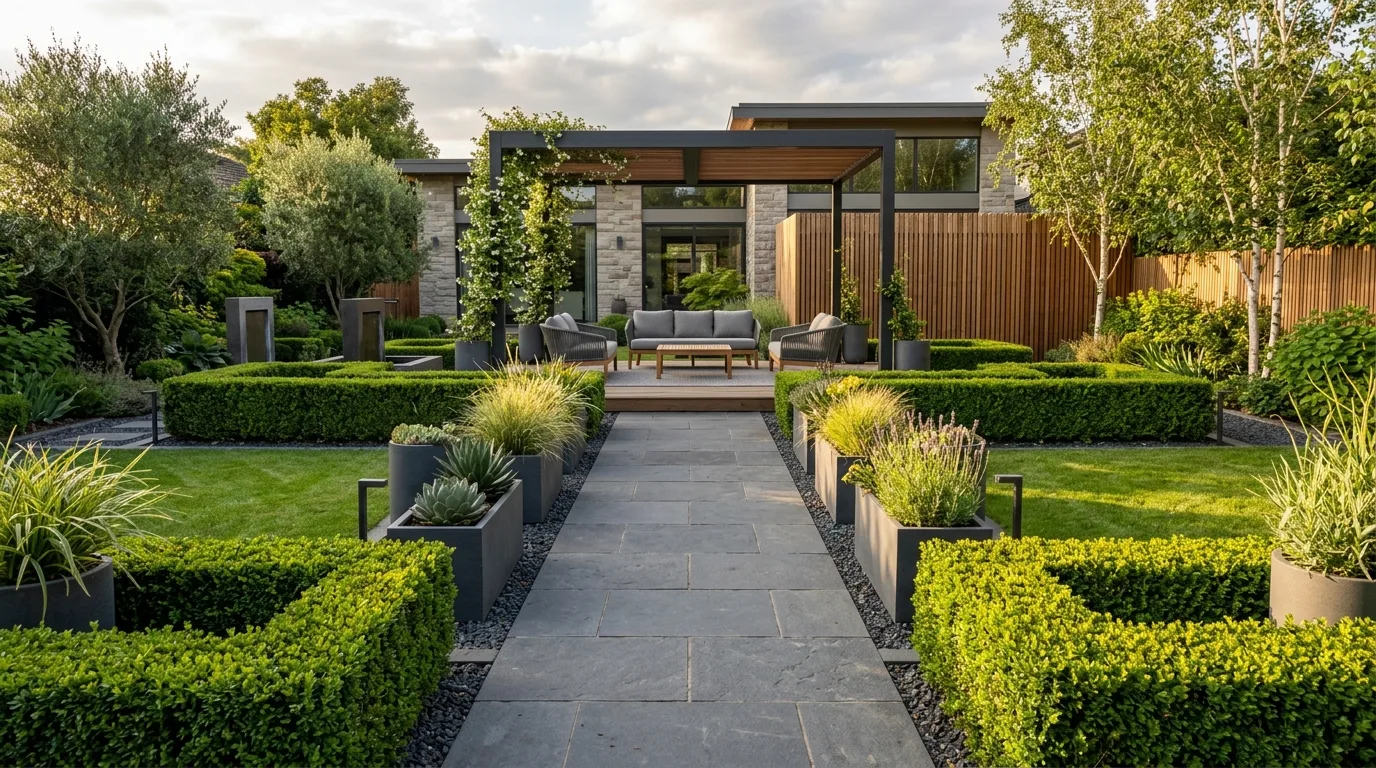
Symmetrical Boxwood Arrangements
Symmetry and boxwood work beautifully together and make the backyard feel much more ordered.
A strong fit for balanced layouts.
Best for: classic symmetry
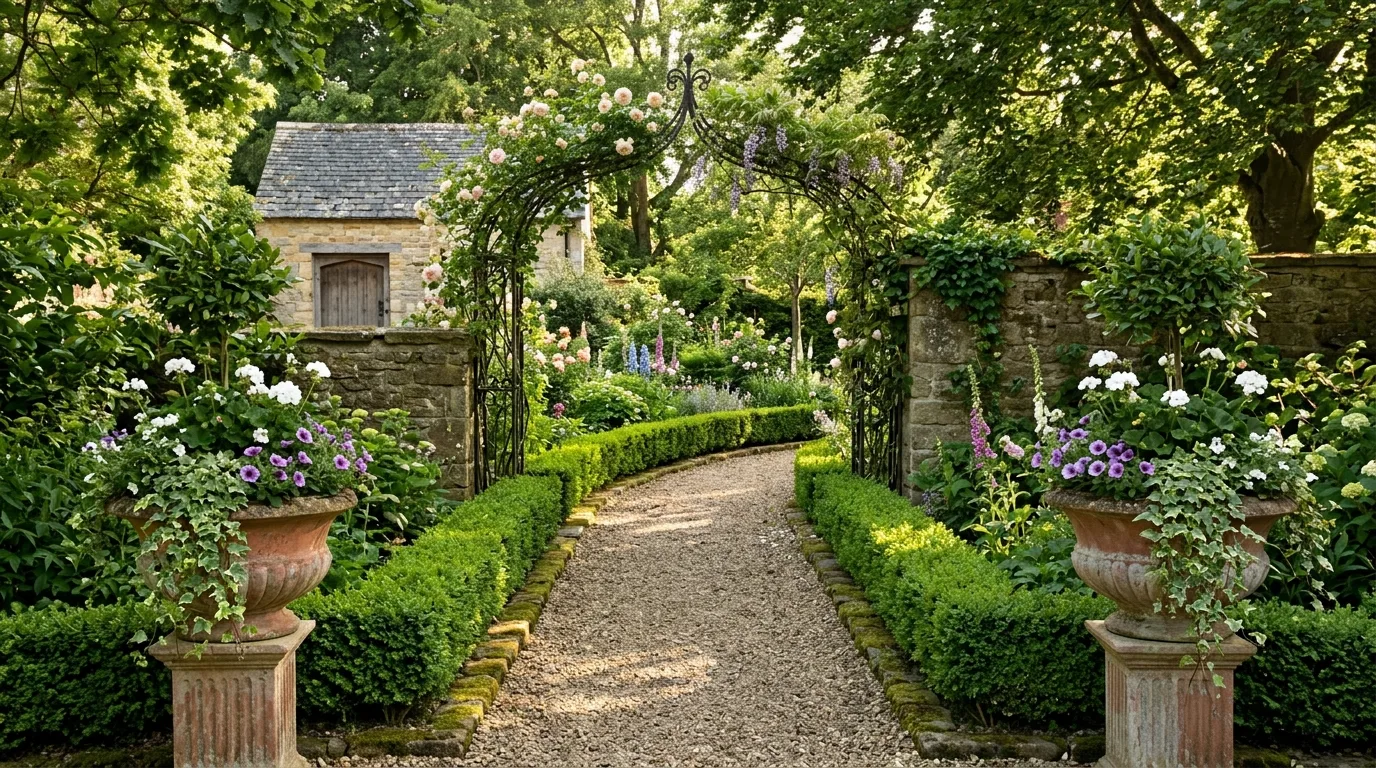
Boxwood-Lined Garden Pathway
A path lined with boxwood feels timeless and gives the walk through the garden a stronger sense of occasion.
A lovely way to structure movement.
Best for: formal garden routes
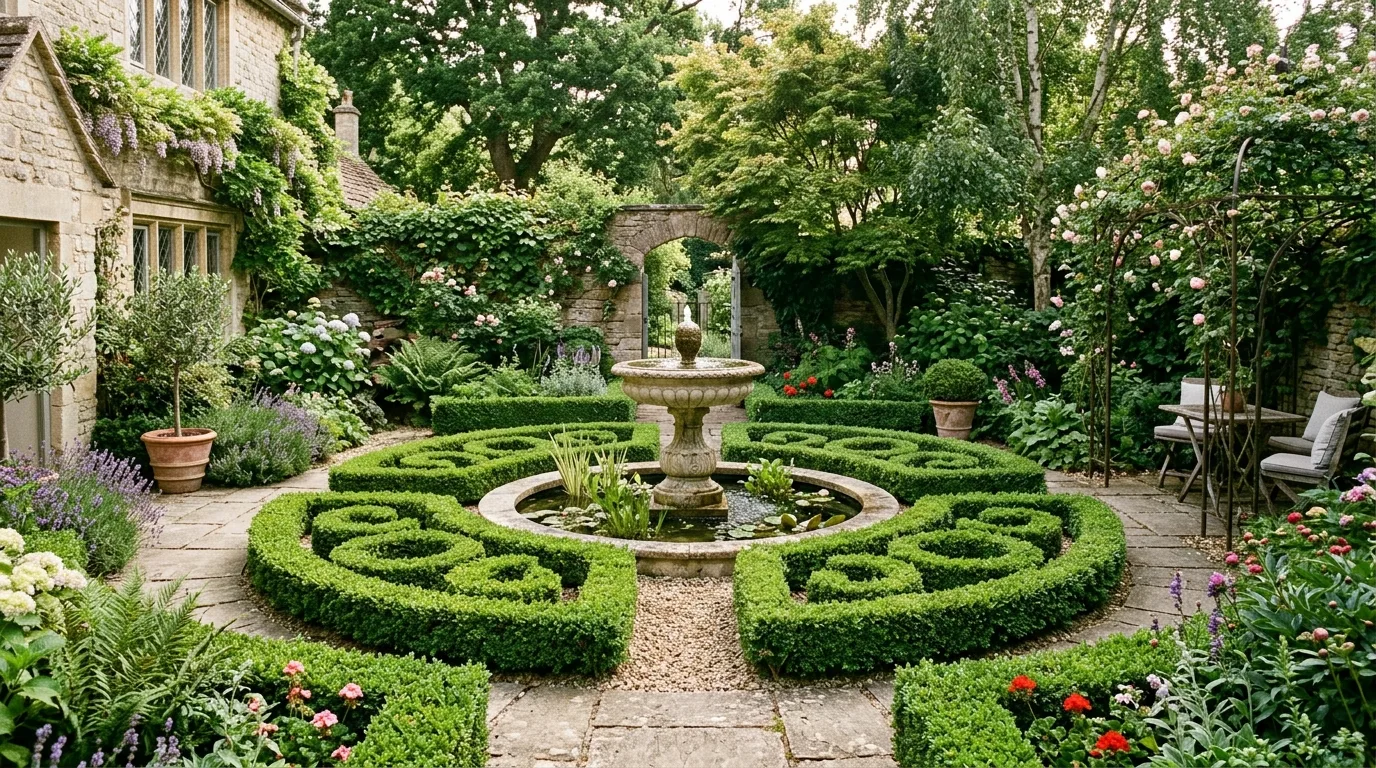
Circular Boxwood Courtyard Design
Circular boxwood shapes soften the formality a little while still keeping the classic structure intact.
A useful way to add variety to a formal plan.
Best for: courtyard focal layouts
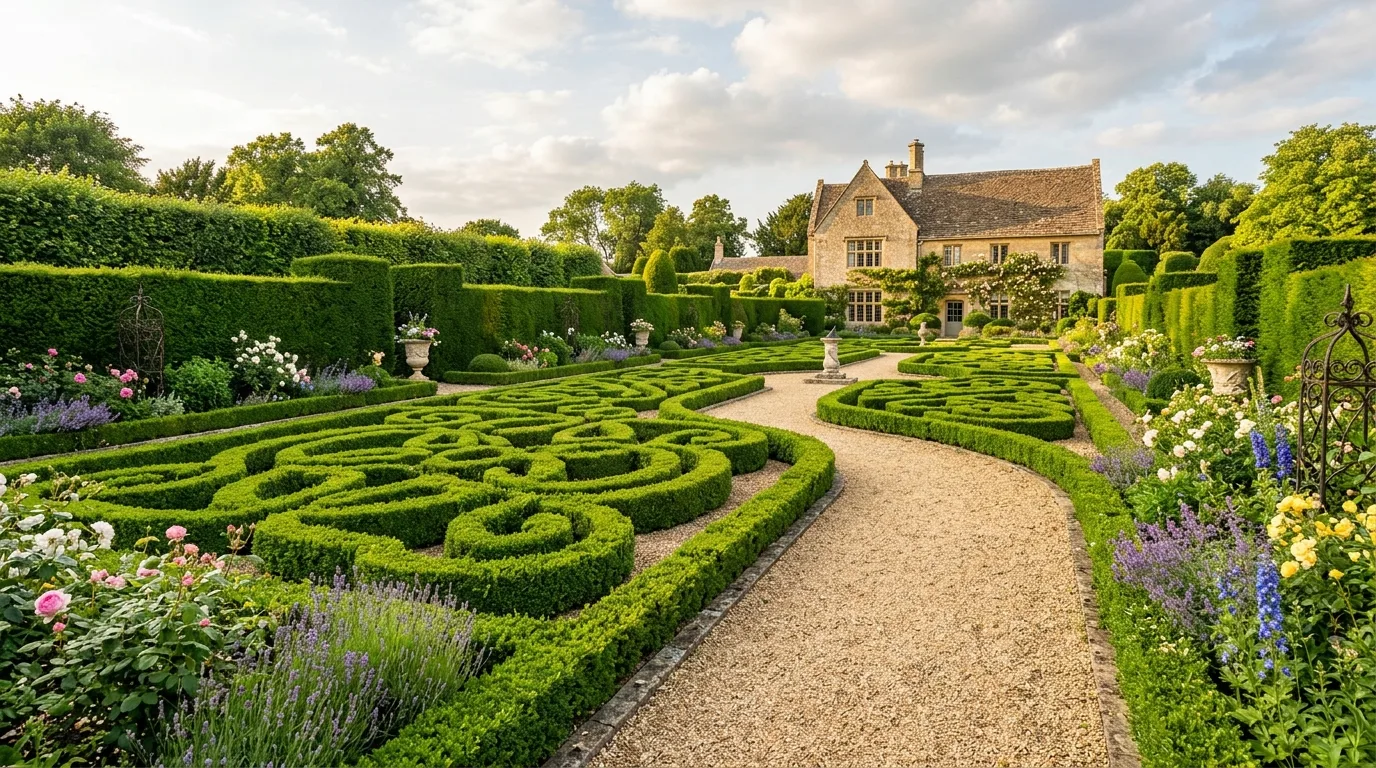
Boxwood Parterre Garden
A parterre uses boxwood to create one of the most classic and recognizable formal garden patterns of all.
A beautiful choice for strong traditional design.
Best for: high-formality gardens
Why boxwood creates such a classic look
Boxwood creates a classic look because it brings reliable shape and rhythm into the garden. When used well, it gives the design a strong backbone without needing a lot of extra decoration.